What are the strengths that often come with ADHD?
A careful way to recognise an individual child’s strengths without promising that ADHD gives everyone the same talents.
The short answer
There is no universal set of ADHD strengths. Some people with ADHD describe creativity, energy, flexibility, deep interest, humour or social sensitivity as positive parts of their experience, but the evidence is still limited and these qualities are not guaranteed by a diagnosis. Start with the child rather than a list. Name what you have observed, the setting in which it appears and the support that lets it develop. A strengths-based account should sit alongside honest recognition of difficulty, not require the child to turn every struggle into a gift.
What helps, in short
- Describe this child's strengths rather than promising an ADHD trait.
- Strengths can depend on interest, setting, support and opportunity.
- Ask the child which parts of their experience feel useful or important.
- Positive language should not minimise impairment or replace support.
Parents are often offered a reassuring list: children with ADHD are creative, energetic, spontaneous, funny, resilient or able to focus intensely. Some children recognise themselves in parts of that list. Others hear another set of expectations they are failing to meet.
ADHD does not distribute a standard strengths package. The fairest approach is to describe the child you know.
What people with ADHD have reported
In a 2022 study, adults recruited through a Dutch ADHD and dyslexia organisation described positive characteristics including creativity, dynamism, flexibility and social or emotional qualities [2]. The sample was self-selected and adult, so it cannot show that these strengths are caused by ADHD or common to all children.
A 2025 qualitative study interviewed 12 children with ADHD. They described positive and negative parts of their experience, with some mentioning energy, creativity, fun and intense focus [3]. Twelve voices can add depth but cannot establish a general profile.
These studies support asking people about positive experiences. They do not justify turning a reported theme into a promise.
Name the strength precisely
“You are creative because of ADHD” is broad. A specific observation gives the child something real:
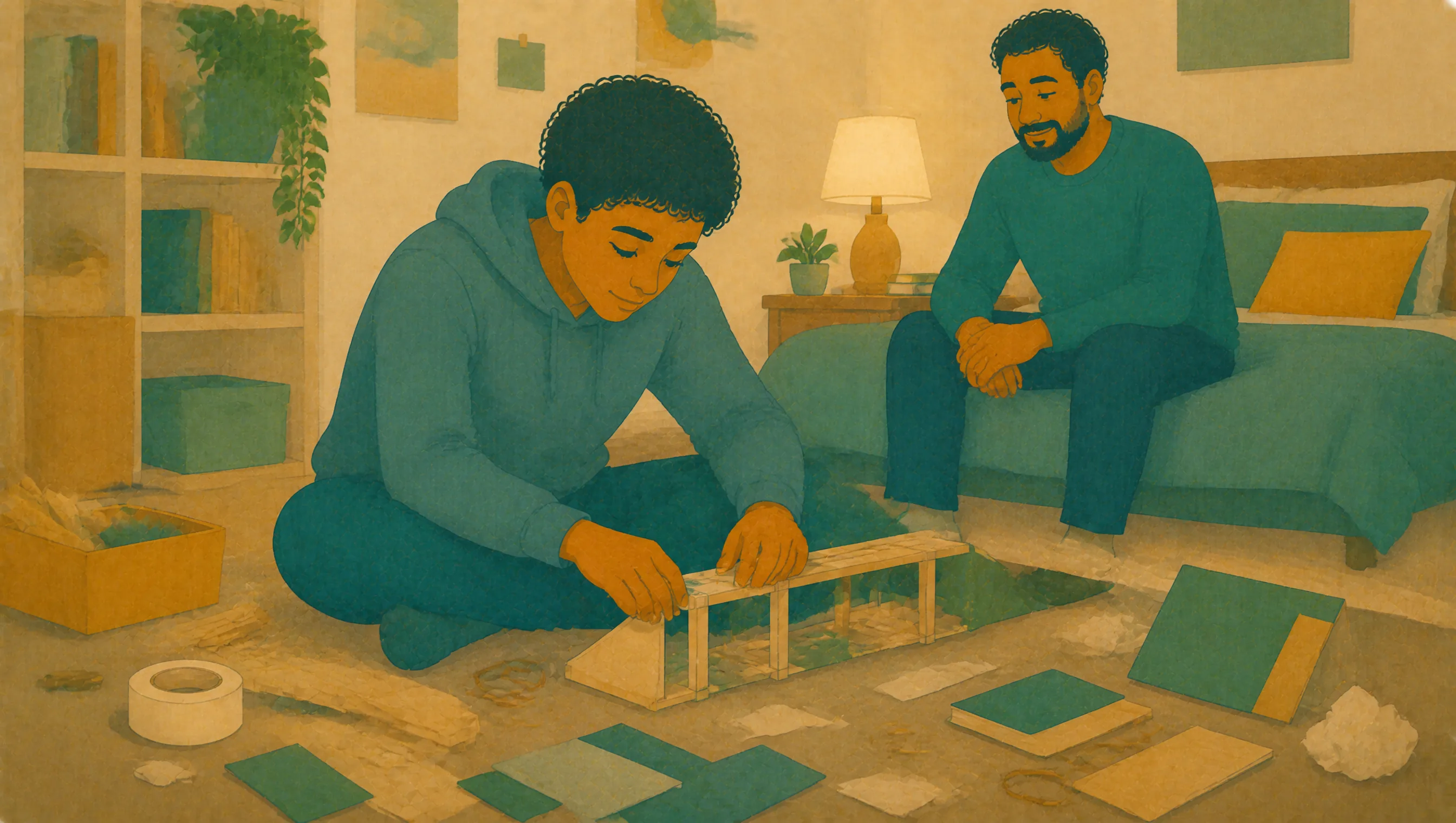
- “You found three ways to build that bridge when the first one failed.”
- “You remembered the detail that made your friend feel included.”
- “You kept practising the song because it mattered to you.”
- “You brought energy to the game and noticed who had not had a turn.”
Include the conditions. Perhaps the child develops original ideas when they can draw first, sustains effort on a chosen problem or uses humour in a familiar group. Conditions do not make a strength less genuine. They show how to help it grow.
Let the child disagree
Ask which qualities they value and whether they connect any of them with ADHD. They may say that energy feels useful in sport and exhausting in class, or that deep absorption is enjoyable until it makes stopping difficult. They may not want a clinical explanation attached to a talent.
NICE recommends that information after diagnosis includes the person's strengths, needs and individual experience [1]. That conversation should make room for uncertainty and change.
Do not turn difficulty into a compulsory gift
A child can value their way of thinking and still want treatment, adjustments or relief from a symptom. Creativity does not cancel missed learning. Humour does not repair sleep. Energy does not make unsafe impulsivity harmless.
Avoid saying, “Your ADHD is a superpower” when the child is describing distress. Start with their account: “That part is hard. We will help with it.” Positive identity grows from being known accurately, not from replacing one oversimplification with another.
The FamilyFX guide to self-esteem and identity helps connect praise to evidence the child can recognise.
Create an opportunity, not just a compliment
If a child thinks visually, let them plan with diagrams. If they care deeply about a subject, find a real project or person who shares it. If they are good at noticing others, give that quality room without making them responsible for everybody's feelings.
Notice whether the opportunity is accessible. A child with original ideas may still need help recording them. A strong interest may need transport, materials or an adult who can tolerate repeated conversation. Support does not dilute the strength; it helps the child use it.
Share specific evidence with school. “She is creative” is easy to praise and overlook. “She explains science ideas clearly through diagrams and needs an option to plan that way before writing” can influence teaching.
Strengths develop through access, practice and support. Name what is there, ask what the child wants to do with it, and keep helping with the parts of ADHD that make life harder.
Sources and further reading
- [1] NICE. Attention deficit hyperactivity disorder: diagnosis and management. 2018; last reviewed May 2025 (accessed 4 August 2026).
- [2] Schippers and colleagues. A qualitative and quantitative study of self-reported positive characteristics of individuals with ADHD. Adult convenience sample; not evidence of universal child traits.. 2022 (accessed 4 August 2026).
- [3] Keddington and colleagues. A qualitative study of the lived experience of children with ADHD. Interviews with 12 children aged 8 to 14.. 2025 (accessed 4 August 2026).
The Family Reset System
Need more than one answer?
Membership opens the full FamilyFX Library and brings the articles together with eight modules, fourteen deep guides, practical packs, document-building tools and My FamilyFX. It costs £79.99 a year, and NeuroFX patients can use an access code for a free first year.
See what is included →