
How do we handle eating out with a child who finds restaurants hard?
Choose the part of eating out that matters, reduce the waiting and food pressure, and keep a practical exit and alternative meal available.
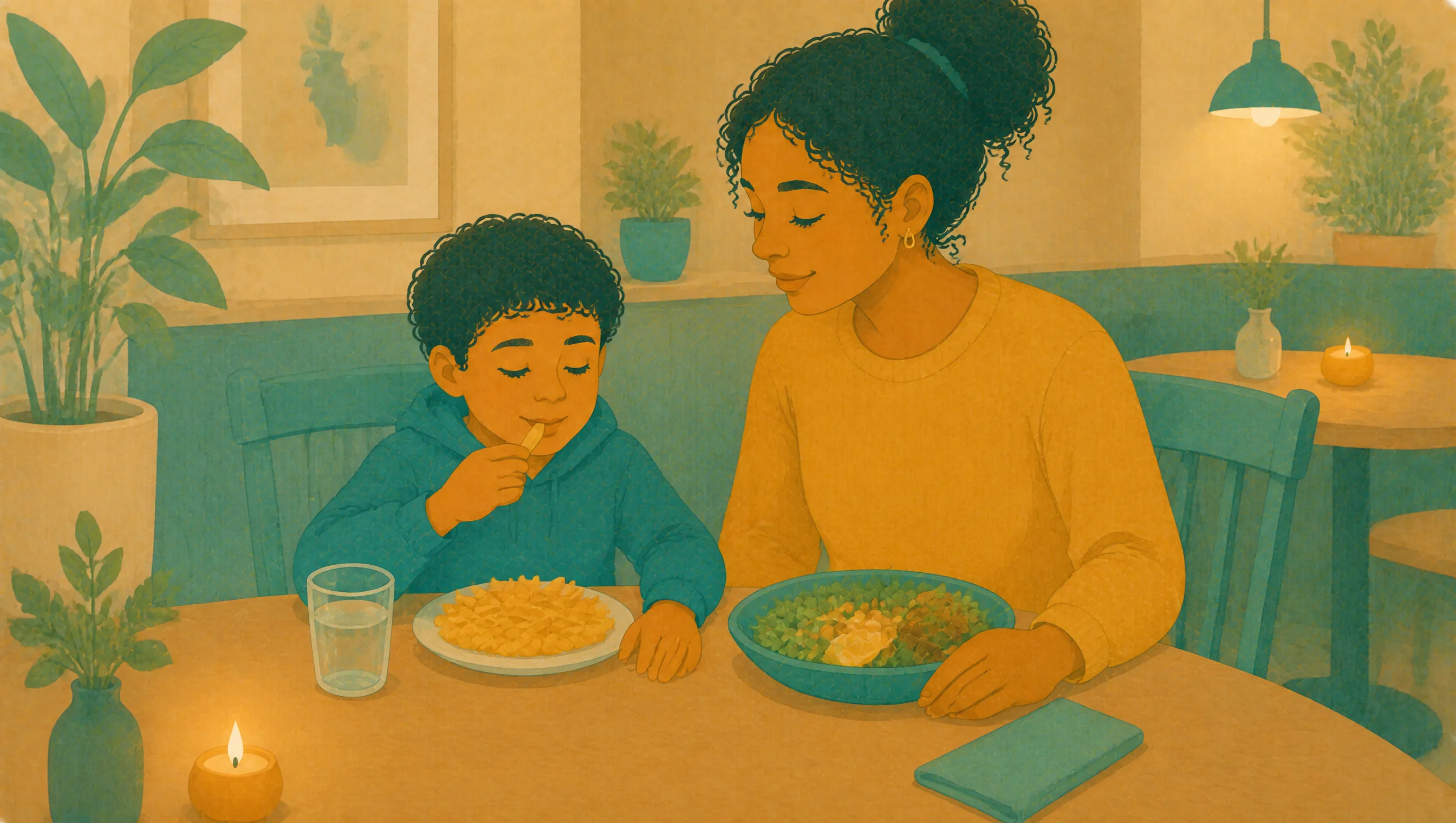
The short answer
Decide what the family wants from eating out and choose the smallest version that provides it. Check the menu, noise, seating, toilets, waiting and payment before you go. Ask for a quieter table, food served in a suitable order, space for a communication or sensory aid, or another specific change, then confirm what the restaurant can offer. Bring a familiar food if the venue allows and your child needs it; do not make trying restaurant food the price of joining the family. Arrive before hunger becomes urgent, keep the child informed about the wait and agree who can leave with them. Takeaway, outdoor seating, dessert only or a short visit can preserve the shared experience.
What helps, in short
- Decide whether the valued part is the meal, the people or spending time somewhere together.
- Check noise, seating, menu, toilets, waiting and payment in advance.
- Protect reliable food without turning the table into a tasting lesson.
- Ask for a precise change and keep an exit or takeaway option.
Restaurants combine hunger, waiting, smells, conversation, unfamiliar food and other people's attention. A child may like going out with the family and still be unable to eat or remain at the table in that setting.
Choose what you want to preserve. It might be seeing grandparents, marking a birthday or having half an hour somewhere different. The child does not need to eat a conventional restaurant meal for that part to count.
Check the practical details
Look at the current menu and photographs, then contact the restaurant about the details that matter:
- quieter times and tables away from speakers, kitchens or hand dryers;
- outdoor seating;
- how long food usually takes;
- whether a child's food can arrive first;
- whether familiar food may be brought for a disability-related need;
- space for a buggy, wheelchair or other equipment;
- accessible toilet and changing facilities; and
- whether you can pay promptly or take unfinished food away.
Ask for the change rather than a general promise that the restaurant is autism friendly. In Great Britain, service providers may need to consider reasonable adjustments for disabled customers, depending on the circumstances [2]. Northern Ireland has separate law. Confirm what this venue can offer on this visit.
Keep eating separate from attending
If your child relies on a small range of foods, do not make hunger do the work. NHS advice on fussy eating recommends avoiding force and keeping meals calm [1]. A restaurant visit is rarely the best time to test whether a child can manage an unfamiliar food under pressure.
Where the venue permits it, bring a reliable food. Otherwise, identify a suitable item beforehand or plan for the child to eat before or after. Adults can still set ordinary boundaries about throwing food, moving safely through the room and respecting other diners.
Avoid a stream of comments about bites, bravery or the money spent. Put the available options on the table and let conversation move elsewhere.
For persistent eating difficulty, taking pressure out of mealtimes should sit alongside proper health and feeding assessment, not replace it.
Reduce the waiting
Arrive before the child is exhausted or extremely hungry. Show the order: enter, choose, wait, eat, pay and leave. If the wait changes, give a concrete update rather than repeating "soon".
Bring one familiar activity or sensory support. Check that headphones still allow the child to hear any necessary safety instruction. Movement breaks may help some children, but do not send a child to run around a car park or service area without safe supervision.
Ask whether one adult can wait with the child outside while another orders. A short wait in the car, where safe and supervised, may preserve the effort needed for the meal.
Choose the seat around the barrier
A corner table is not automatically best. It may feel protected, or it may trap the child behind other diners. A table near the door can make leaving easier but bring cold air and people passing. Ask what your child notices in restaurants and choose accordingly.
Useful details include whether the chair is stable, the table is close to a speaker, the route to the toilet crosses the busiest serving area, and the child can sit beside a familiar adult without strangers behind them. If the restaurant allocates tables only on arrival, ask staff to record the need and explain what alternatives will be available.
Once seated, reduce the number of decisions. Show two suitable menu options or use the choice already made at home. Ask staff to bring drinks promptly and tell you if the wait will be much longer than expected.
Make leaving possible
Agree a signal and decide which adult can respond. If everybody shares one car, consider whether an adult and child could walk outside, use a nearby safe place or take separate transport home.
Leaving does not have to mean the whole occasion failed. Ask for takeaway boxes, move to outdoor seating or let one adult remain with siblings. The child should not need to explain their distress within hearing of the room.
If a full meal is repeatedly too much, try a smaller version: dessert only, breakfast at a quiet time, a cafe with counter service, a picnic beside the restaurant or takeaway at a relative's house. Planning the whole outing helps when travel and the activity around the meal add most of the cost.
Pay before the child has used every last bit of patience where the restaurant allows it. One adult can settle the bill while another goes outside. If something went wrong, discuss it after the child has eaten and recovered rather than asking them to review the meal in the doorway.
Sources and further reading
Sources and further reading
- [1] NHS. Fussy eaters (accessed 4 August 2026).
- [2] UK Government. Disability quick-start guide for service providers. Applies to Great Britain; Northern Ireland has separate disability-discrimination law. (accessed 4 August 2026).
The Family Reset System
Need more than one answer?
Membership opens the full FamilyFX Library and brings the articles together with eight modules, fourteen deep guides, practical packs, document-building tools and My FamilyFX. It costs £79.99 a year, and NeuroFX patients can use an access code for a free first year.
See what is included →