
How do we start teaching independent travel?
How to teach one familiar journey in manageable stages, including route practice, road safety, shadowing and a back-up plan.
The short answer
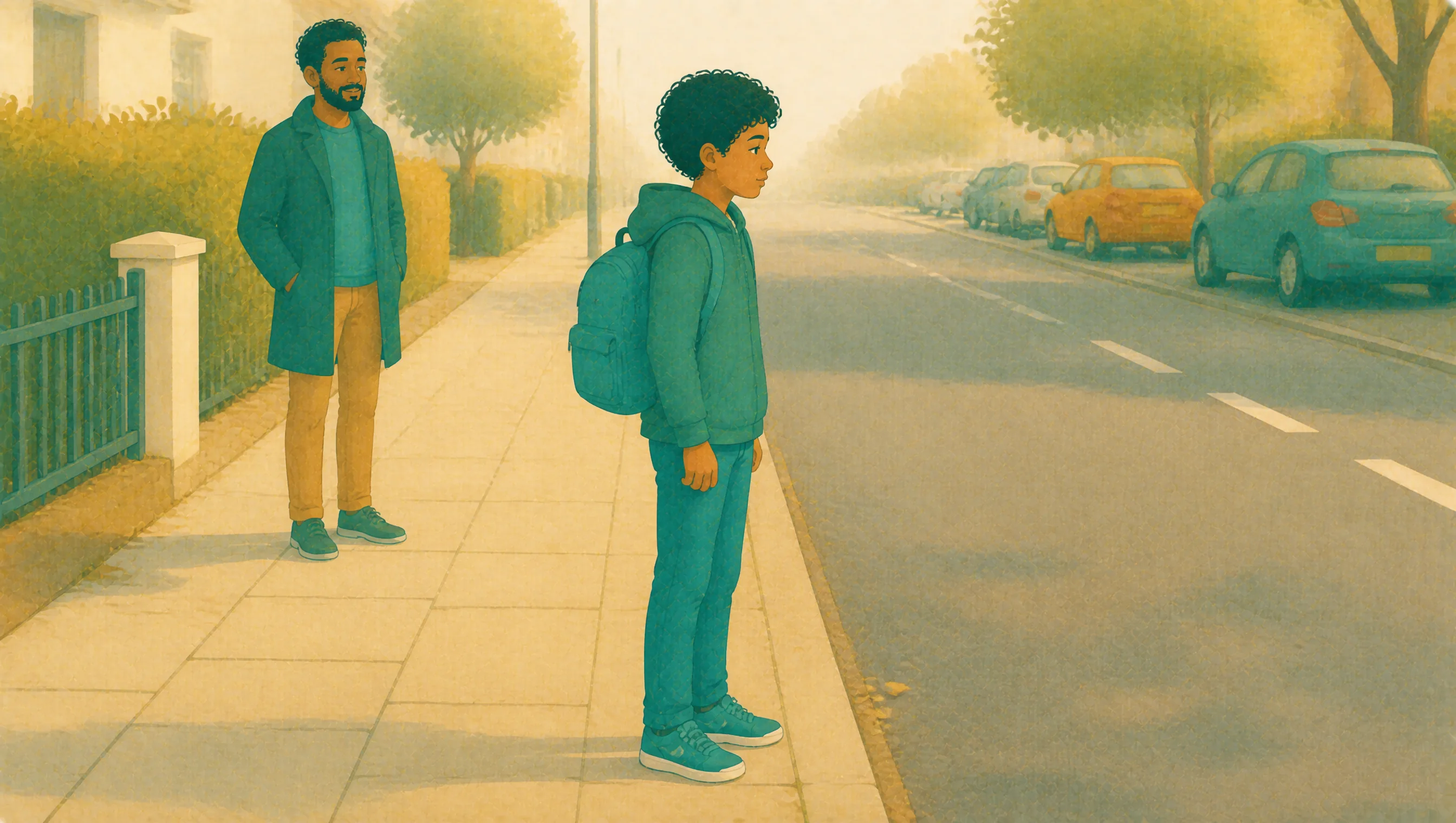
Choose one journey the young person wants to make and assess each part separately: leaving on time, road crossings, finding the stop, using a ticket, recognising where to get off and dealing with a change. Travel together while the young person leads. When the route is familiar, increase distance gradually, perhaps by following behind or meeting at a planned point. Agree what they should do if the service is cancelled, they miss the stop, their phone fails or they feel unsafe. Some councils, schools and colleges offer individual travel training, but availability and eligibility vary locally.
What helps, in short
- Practise one useful route before expecting travel in unfamiliar places.
- Check road safety, timing, tickets, communication and recognition of stops separately.
- Let the young person lead while an adult remains available.
- Rehearse the real route at the time it will normally be used.
- Agree a back-up plan for missed stops, cancellations and low phone battery.
- Ask about local travel training without assuming the young person is eligible.
Begin with one journey that matters to the young person. A regular trip to college, work experience, a shop or a friend's home gives them a reason to learn the route and makes practice easier to repeat.
Avoid judging readiness from age or diagnosis. Watch how the teenager manages each part of the journey and decide where teaching or support is needed.
Break the journey into separate skills
Travel the route together and note what happens from leaving home to arriving. Check whether the young person can:
- leave with the ticket, pass, keys and charged phone they need;
- reach and use road crossings safely;
- find the correct stop, platform or entrance;
- identify the right service and direction;
- manage a ticket or fare;
- recognise where to get off;
- find the destination from the final stop;
- contact somebody or seek help when the plan changes.
Do not take over so quickly that you cannot see which part is difficult. Ask the young person to lead while you stay close enough to prevent an unsafe decision.
Practise the route as it will be used
A quiet Sunday journey may not prepare somebody for a crowded weekday morning. Practise at the usual time when possible, including the walk, wait, noise, traffic and transitions involved.
Repeat the route with the young person making the decisions. Explain one unfamiliar feature at a time. A saved map, visual route, stop list or photograph can remain part of the finished arrangement.
Oxfordshire's travel-training service uses individual, route-specific practice and covers journey planning, road safety, tickets, personal safety and “what if” situations [1]. Local services use different programmes, but those are useful areas for a family to check.
Increase distance gradually
When the young person can lead the route with an adult beside them, change the support in small steps. The adult might walk a short distance behind, travel in another part of the bus or train, or meet at a planned point. Tell the young person where you will be and when you will step in.
Practise on more than one ordinary day before changing the support again. Weather, crowds, tiredness and service changes can affect a familiar journey. Agree which conditions still require accompanied travel.
Write a back-up plan
Decide what the young person should do if:
- the service is cancelled or diverted;
- they miss the stop or board the wrong service;
- the phone or travel app does not work;
- the pass, ticket or money is missing;
- they feel unwell, overwhelmed or unsafe;
- somebody asks for personal information or pressures them to go elsewhere.
Choose safe contacts and places on the route. Put essential telephone numbers somewhere that does not depend on the phone battery. The plan should include permission to stop, wait safely and ask for help rather than attempting to solve every problem alone.
For an occasional or unfamiliar destination, use the fuller guide to planning an accessible day out. If travel practice is affected by a wider risk of leaving a safe place or going missing, include it in the family's safety planning rather than relying on the route card alone.
Ask whether travel training is available
Some councils, schools and colleges provide individual travel training for young people with special educational needs or disabilities. Eligibility, age limits, routes and referral processes vary. Oxfordshire, for example, links its programme to local criteria and supported school or college transport [1].
In England, home-to-school travel duties and post-16 travel arrangements follow different guidance, and the rules elsewhere in the UK are different again [2]. Ask the local authority or education setting what service is available and whether joining it could affect existing transport support.
One completed route does not establish that the young person can travel anywhere alone. Record the route and conditions they can manage, keep the back-up plan current and review support when the timetable, destination, health or season changes. The wider guide to building independence in daily life helps place travel beside money and household skills without expecting them to develop at the same rate.
Sources and further reading
- [1] Oxfordshire County Council. Independent travel training for young people with special educational needs and disabilities (accessed 3 August 2026).
- [2] Department for Education. Home-to-school travel. Applies to England; post-16 and other UK nation arrangements differ. (accessed 3 August 2026).
The Family Reset System
Need more than one answer?
Membership opens the full FamilyFX Library and brings the articles together with eight modules, fourteen deep guides, practical packs, document-building tools and My FamilyFX. It costs £79.99 a year, and NeuroFX patients can use an access code for a free first year.
See what is included →