
What should I pack for a day out with a child who needs sensory support?
Pack a small, familiar day-out kit around the child's likely barriers, essential care and the planned way to pause or leave.
The short answer
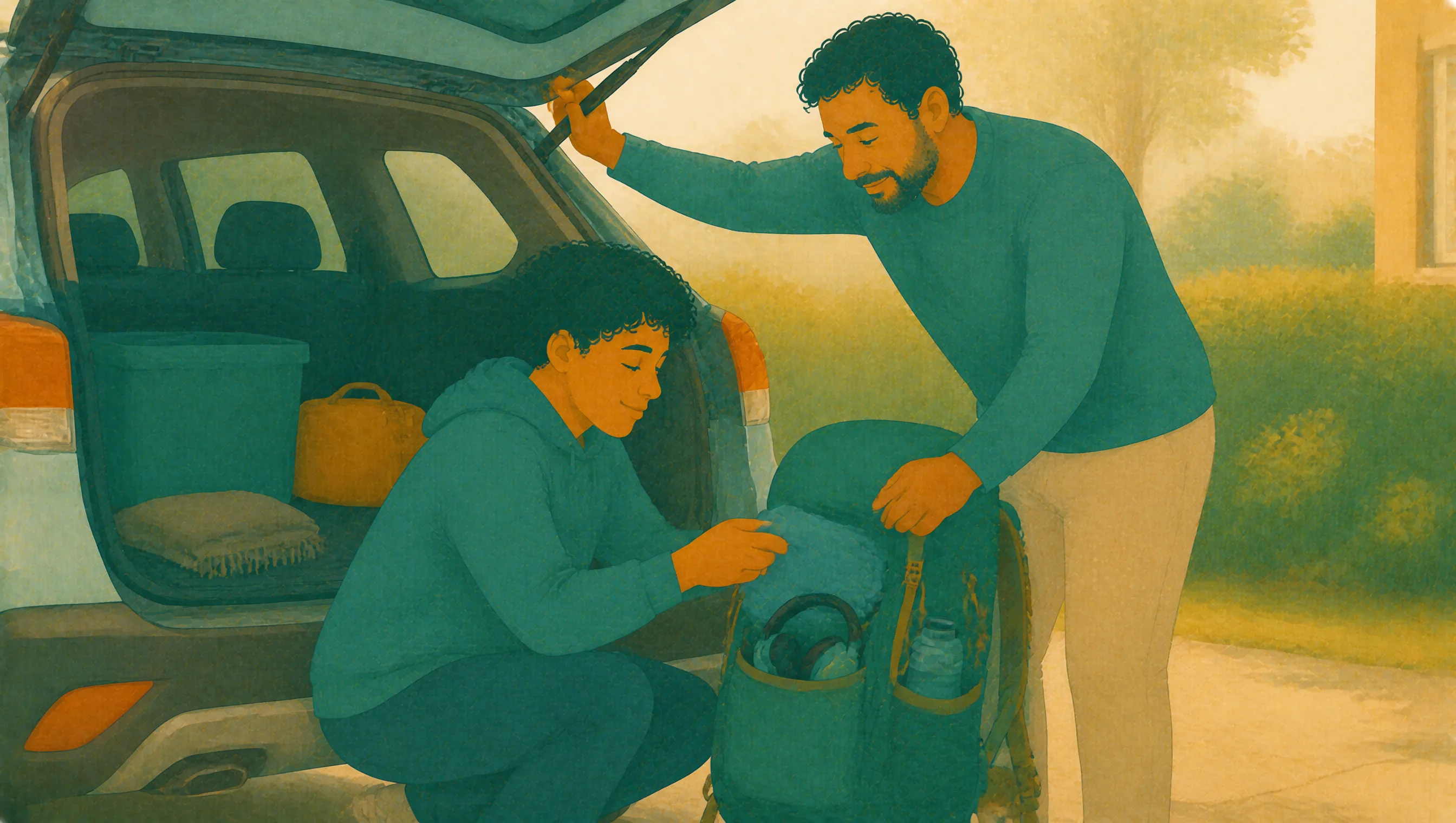
Pack for the barriers you expect, using items your child already knows. A compact kit might include headphones or ear defenders, a cap or sunglasses, familiar food and water, spare comfortable clothing, a communication card or device, one ordinary comfort item, medication and personal-care supplies, and a charger or power bank. Add booking details and any confirmed access arrangement. Check venue and transport safety rules, especially where hearing instructions or using equipment matters. Keep essentials reachable and let the child help choose what comes. The bag supports the plan; it does not replace quieter timing, a break place or a workable exit.
What helps, in short
- Pack familiar items for identified barriers rather than a generic sensory kit.
- Keep medication, communication and personal-care essentials accessible.
- Check whether an item is safe and permitted during the activity.
- Include a break and exit plan as well as things to carry.
A useful day-out bag is not a catalogue of sensory products. It contains the few familiar things that address this child's likely barriers, plus whatever is needed for health, communication and getting home.
Start with the route. Think about travel, queues, noise, light, temperature, food, toilets, touch and waiting. Pack for the difficult points you can name.
A practical core list
Depending on the child and activity, consider:
- headphones or ear defenders already used by the child;
- a cap, sunglasses or familiar hood;
- water and food the child can reliably eat;
- comfortable spare clothing;
- wipes, continence or personal-care supplies;
- prescribed medication and the information needed to use it safely;
- the child's communication device, card, symbols or notebook;
- one ordinary comfort item;
- one familiar activity for waiting;
- a charger, cable or permitted power bank;
- booking details and confirmed access arrangements; and
- emergency contacts somewhere other than the child's phone.
West Suffolk NHS occupational-therapy guidance recommends observing the individual's responses and making changes around their particular sensory differences [1]. The same principle applies to packing. A chewy item, weighted product or fidget is not automatically suitable because it appears in a sensory kit.
Let the child help choose
Ask which items they expect to use. A child who chooses between headphones and ear defenders is more likely to know where they are and what each one is for. Limit the number of waiting activities so the bag remains easy to carry and search.
Put essentials in consistent pockets. Medication, communication and personal-care supplies should not sit under the picnic or in another adult's car.
Check the kit before leaving without asking the child to carry responsibility for clinical or safety items. They can choose their own supports while an adult confirms medicine, water, contacts and the way home.
For children who may become separated, carry current contact information in a form that suits their age and privacy. Do not depend on a phone that may be flat, locked or lost.
Check the activity rules
An item that helps while waiting may be unsafe during the activity. Ear defenders can prevent a child hearing instructions near traffic, water, machinery or an evacuation alarm. Loose straps and weighted items may be unsuitable on play or climbing equipment. Food and liquids may be restricted at security or in particular venues.
Ask before the day and tell the child when an item must be put away. For flights, the Civil Aviation Authority advises arranging needed assistance through the airline or travel agent rather than relying on a lanyard or personal kit [2].
Pack a plan as well as objects
The bag cannot make an inaccessible queue or room workable by itself. Keep the answers to these questions with the booking:
- Where can we wait or pause?
- How will the child ask to leave?
- Which adult will respond?
- Can we re-enter?
- How are we getting home early if needed?
The full day-out planning guide covers those arrangements. If you are unsure what input is creating difficulty, map the sensory load before buying more equipment.
After the outing, remove what was never used, replace anything consumed and note what was missing. Keep the kit small enough that the family can find the one thing that matters in a busy moment. Keep the bag secure, weatherproof and easy for an adult to open quickly.
Sources and further reading
- West Suffolk NHS Foundation Trust: Occupational therapy for children who have sensory processing differences
- Civil Aviation Authority: How to access help and support when travelling by air
Sources and further reading
- [1] West Suffolk NHS Foundation Trust. Occupational therapy for children who have sensory processing differences (accessed 4 August 2026).
- [2] Civil Aviation Authority. How to access help and support when travelling by air (accessed 4 August 2026).
The Family Reset System
Need more than one answer?
Membership opens the full FamilyFX Library and brings the articles together with eight modules, fourteen deep guides, practical packs, document-building tools and My FamilyFX. It costs £79.99 a year, and NeuroFX patients can use an access code for a free first year.
See what is included →