
How do I prepare my child for a party, trip or family event?
How to prepare the whole event envelope: travel, people, sensory conditions, participation, uncertainty, exit and recovery.
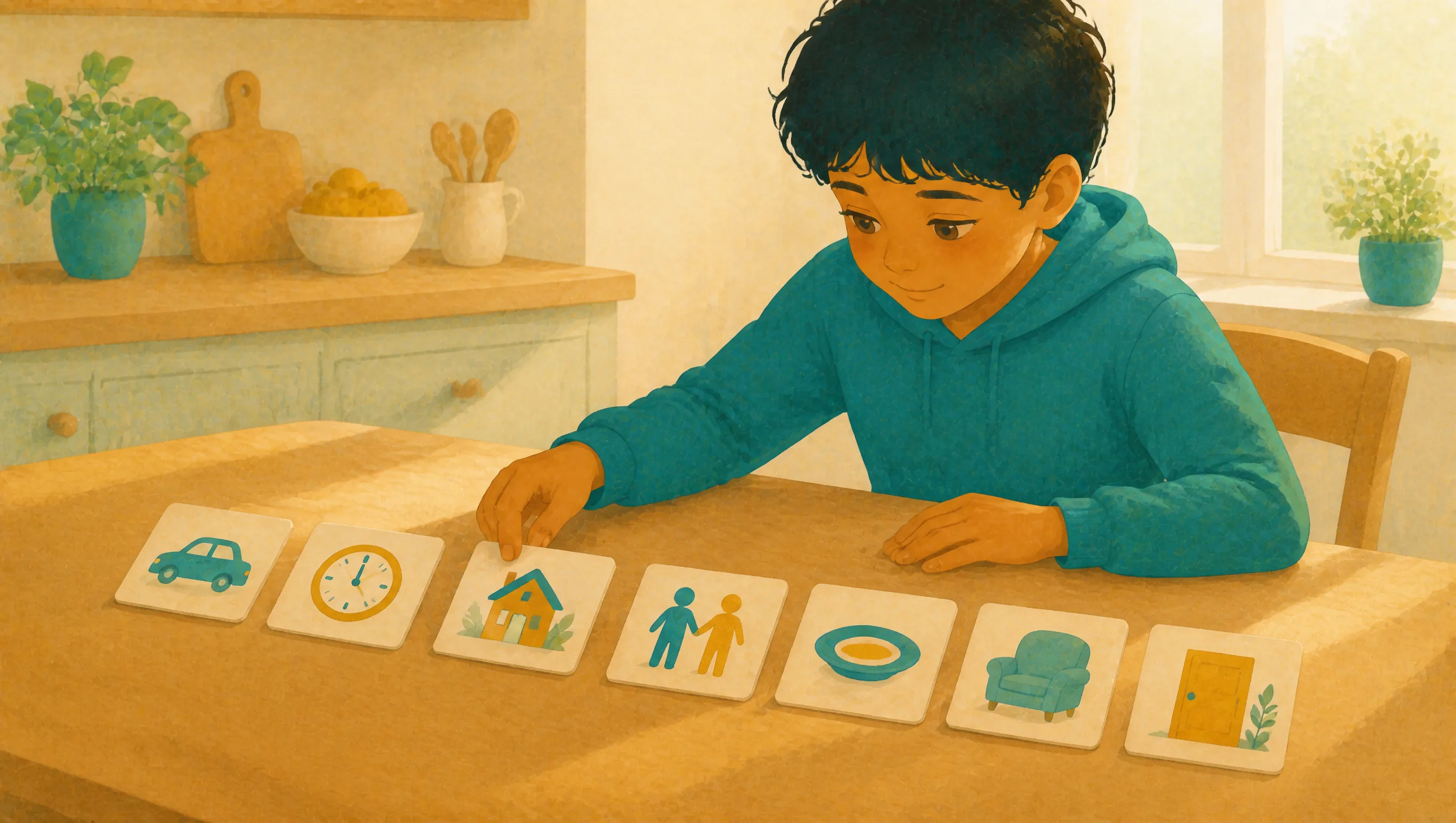
The short answer
Prepare the whole event, not just its main activity. Tell the child what is known about the journey, place, people, sequence, food, clothing, toilets, noise, waiting and return home. Separate confirmed details from possibilities and say how updates will arrive. Ask what participation matters to the child; attendance need not mean joining every activity, greeting every person or staying to the planned end. Arrange accessible food, communication, sensory support, medication and a quiet or lower-demand place. Give the child a signal for help and decide who can leave with them, where they will go and whether re-entry is possible. Preserve familiar anchors and schedule recovery afterward. If the event is optional, declining or shortening it may be a valid decision. Preparation improves information and access; it cannot guarantee that an unfamiliar or demanding event will be manageable on the day.
- Prepare travel, arrival, people, activities, sensory conditions, exit and recovery.
- Separate confirmed, possible and unknown information.
- Define participation with the child rather than treating full attendance as success.
- Make the help signal and exit route real before the event begins.
- Leave capacity for recovery even when the event is enjoyable.
A child may want to attend a cousin's party and still be unable to enter the room. They can look forward to a day trip and find the queue, toilet or journey more difficult than the attraction itself.
Preparation is not persuasion. It gives the child a usable map, preserves choices and makes support available across the whole event.
Plan the event envelope
Begin before the headline activity and continue after it.
Map:
- getting ready and leaving home;
- the journey and any waiting;
- arrival and first place to go;
- people, activities and social expectations;
- food, drink, toilets, medication and sensory conditions;
- breaks, help and exit;
- the journey home;
- recovery and the next necessary demand.
A perfect description of the birthday games cannot help a child who does not know where coats go, whether the toilet has a hand dryer or how to leave a conversation.
Separate known, possible and unknown
Write only what you can support.
Known: location, invited people, planned start, transport booking.
Possible: music, party games, a delay, unfamiliar guests.
Unknown: exact noise, how long food takes, whether the child will want to join.
Update route: who checks, when they check and how the child will be told.
This protects trust. “It will be quiet” is not reliable because an organiser calls an event autism-friendly. “The organiser expects fewer than twenty people; we will check the room on arrival” separates their information from your plan.
Show the actual place
Use current photographs, maps, a venue guide or a short visit where useful. Show entrance, waiting place, toilets, main activity, food area, quieter space and exit.
Do not flood the child with every online review. Choose information that answers their questions. A photograph taken years ago may be misleading; label uncertainty.
For a family home, explain unfamiliar rules and physical details: pets, shoes, bedroom privacy, where the child can sit and which rooms are not available.
The National Autistic Society suggests previewing environments, asking providers about support and planning sensory and social needs for travel and holidays [3]. This is practical guidance, not evidence that previews make every event accessible.
Prepare people and expectations
List who is expected, who the child knows and who can help. Explain greetings without requiring touch, eye contact or conversation.
Auntie may offer a hug. You can say hello, wave or stand beside me. I will tell her before we arrive that hugs are your choice.
Tell relatives what will help in concrete language: give the child time to answer; do not quiz them about school; ask before taking photographs; do not block the quiet room; accept the agreed goodbye.
Do not disclose a diagnosis more widely than necessary without considering the child's privacy. A needs-based message may be enough: “Jamie may watch before joining and may leave without a long goodbye.”
Define participation
Attendance is not one performance. The child might:
- arrive after the busiest greeting period;
- watch an activity before deciding;
- join one game and skip another;
- eat familiar food brought from home;
- use headphones or move around;
- greet one person and not circulate;
- leave before cake or speeches;
- participate online or send a message instead.
Ask what matters to them. A child may care about giving the present but not playing games. A teenager may want to see cousins but not sit through a formal meal.
If the event is optional, declining is a real option. Shorter attendance can be successful participation, not a failed full visit.
When attendance matters to somebody else
A wedding, funeral, religious event or milestone may carry deep meaning for other family members. Name that meaning without making the child responsible for everybody's feelings.
Separate the essential part from convention. The child might attend the ceremony but not the reception, join a photograph without staying for speeches, visit the relative separately or contribute a message. If attendance is genuinely required, say so and widen control over clothing, arrival, seating, communication, breaks and departure.
Do not promise relatives a performance the child has not agreed to give. Tell them the practical plan in advance and identify one adult who will defend it. The whole-family topic helps when different needs compete around the same event.
Grief and distress can change the plan on the day. A child may understand death and still be unable to tolerate a crowded funeral. Give factual information, avoid euphemisms and keep a trusted adult available.
Respect a teenager's privacy and social position
An older child may want support without it being announced to peers or relatives. Ask how they want the plan communicated. A text between child and parent, an agreed exit phrase or a seat near the door may be preferable to a visible schedule.
Discuss photographs, social media and disclosure before the event. The child may consent to a family photograph but not to it being posted. Tell hosts or relatives clearly where needed.
Do not use preparation as a script for appearing typical. Practising where to find the toilet or how to ask for a break supports access. Rehearsing eye contact, small talk or suppression of movement because adults fear judgement serves a different purpose and may add load.
Coordinate the adults
Write a short adult plan: who carries medication and tickets, who supports siblings, who responds to the help signal and who can leave. Share only the child's information each person needs.
If the family separates across vehicles or accommodation, make sure the child's communication device, safe food, keys and recovery items travel with the responsible adult. A carefully packed kit in the other car is not support.
For two households, confirm who told the child, which version is current and where they return afterward. Do not make the child reconcile different adult plans at the event.
Audit sensory and physical access
Consider sound, light, crowds, smells, temperature, clothing, seating, movement, food and toilets. Include the journey and recovery space.
Take only aids the child accepts and knows how to use. Pack charging, spares and storage. Ear defenders are not a complete plan if the child also needs communication access and a way out of the room.
NICE recommends considering sensory sensitivities, communication and the physical and social environment in support for autistic children [2]. It does not prescribe a universal sensory kit.
Ask the venue direct questions: Is there amplified music? Are lights likely to flash? Can the child wait elsewhere? Is re-entry allowed? Where is the accessible toilet? Can food be brought in?
Protect food, medicine and communication
Check menus and timings rather than assuming suitable food will appear. Bring an agreed safe option where the venue allows. Do not use hunger to encourage the child to try party food.
Keep prescribed medication in adult control as required, with safe storage and the prescriber's instructions. Identify who carries and administers it.
Prepare a low-language help signal: a card, message, gesture or phrase. The child may need it for noise, pain, toilet access, a social problem or leaving. Adults should respond without demanding an explanation first.
Make the quiet place real
“You can take a break” is useful only if a place exists and the child can reach it.
Inspect or identify the location: car, side room, garden, corridor or a quieter table. Check supervision, temperature, public access and whether other guests will follow.
A break may mean reduced speech with a trusted adult, not being sent away alone. Decide whether the child can return to the event and how they will know when.
Build an exit that can happen
Agree:
- the child's leave signal;
- which adult responds;
- where they go first;
- who stays with siblings;
- which transport is available;
- whether leaving means the event is finished;
- how belongings and goodbyes are handled.
Do not promise immediate departure if the only driver cannot leave. Instead, give the truthful route: “If you signal, we go to the car. Dad will take the others home at six; I can stay with you until then.”
For a community event, check re-entry and ticket rules. Keep keys, travel passes and necessary items with the leaving adult.
Prepare for change
Plans change through weather, illness, queues and other people. Show what remains fixed and how updates arrive.
The train time may change. The station screen and app hold the current time. If it is cancelled, we go to the waiting room while Mum checks the two routes home.
Use the guide to communicating a changed plan rather than building every unlikely disaster into the child's preparation.
NHS guidance recommends familiar routines, early information about changes and gradual preparation in safe, familiar conditions where useful [1]. Do not create surprise rehearsals or withdraw support to test flexibility.
Schedule recovery
An enjoyable event can still use sensory, social and executive capacity. Keep the next period lighter where possible. Make food, drink, familiar clothing and a preferred recovery option available.
Avoid asking for a full review in the car. Offer a way to communicate urgent concerns, then revisit details later.
Protect siblings from becoming the recovery plan. They may also need food, attention or a chance to describe their experience.
Review access, not appearance
Afterward, ask:
- Was the information accurate and retrievable?
- Could the child choose meaningful participation?
- Were basic, sensory and communication needs met?
- Did the help signal and exit work?
- Which adult job was missing?
- What supported recovery?
- Would the child choose a similar event again?
Do not judge the event only by whether the child looked calm or stayed until the end. A useful plan lets them know what is happening, take part in ways that matter and leave with trust and dignity intact.
Sources and further reading
- [1] NHS. Supporting an autistic child. Page last reviewed May 2026 (accessed 4 August 2026).
- [2] NICE. Autism spectrum disorder in under 19s: support and management. 2013; last updated June 2021 (accessed 4 August 2026).
- [3] National Autistic Society. Going on holiday: tips for autistic people and families. Current online guidance (accessed 4 August 2026).
