
FamilyFX: The Family Reset System

Why does noise upset my child so much?

How to identify the sound, setting and meaning that make noise difficult, use hearing protection carefully and know when to ask for audiology advice.
By FamilyFXWritten February 2026Published 6 August 2026Last reviewed 28 June 2026Next review due 28 June 20278 min readReviewed by FamilyFX
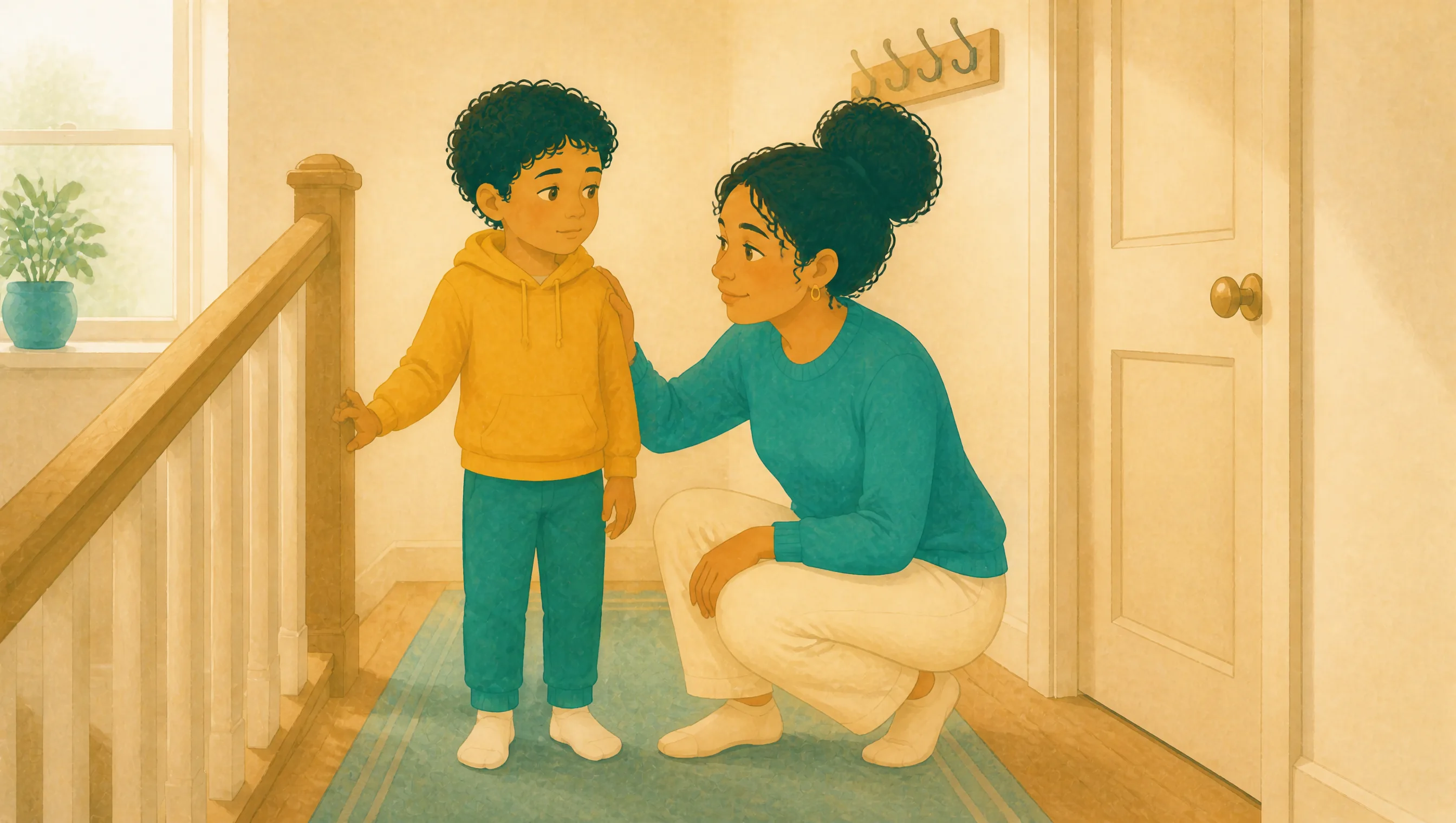
A young boy in a yellow hoodie standing by a staircase while a woman kneels to speak with him, hand resting on his shoulder near a front door.

The short answer

A sound may be physically too loud or painful, sudden and unpredictable, hard to separate from background noise, or linked with fear of what happens next. Find the exact sound and setting rather than calling every noisy place the same problem. Give warning where possible, create distance, reduce competing sound and provide an agreed exit. Hearing protection may be useful for short, unavoidably loud situations, but NHS audiology guidance warns against wearing earplugs or defenders all the time because constant sound reduction may increase sensitivity and can hide safety information. Do not force a child to remain beside a painful sound as exposure practice. Seek GP or audiology advice when everyday sounds feel too loud or painful, the change is sudden or one-sided, or there are hearing, ear, balance, headache or neurological concerns.

  • Volume, pitch, suddenness, repetition, background competition and meaning may all matter.
  • Sound sensitivity is not the same as unusually good hearing and may need a hearing assessment.
  • Warning, control, distance, quieter routes and fewer competing sounds can improve access.
  • Use hearing protection for a defined purpose, not as an automatic all-day solution.
  • Painful, sudden, one-sided or function-limiting sensitivity deserves health advice.

The hand dryer lasts twenty seconds. For a child who hears it as painful, unpredictable and impossible to escape, those seconds can change whether they will use a public toilet again.

Noise sensitivity is not one experience. The practical work begins by identifying what the child hears, what the sound predicts and what access they lose.

Find the property of the sound

Ask whether the difficulty involves:

  • loudness;
  • a particular pitch or tone;
  • sudden onset;
  • repetition;
  • vibration through the floor or body;
  • several voices or sounds at once;
  • not knowing where the sound comes from;
  • not knowing when it will stop; or
  • the event associated with it, such as an alarm, haircut or crowded lunch.

Not all sounds at the same volume cause the same response. NHS guidance distinguishes hyperacusis, where everyday sounds seem unusually loud and may be painful, from misophonia, where particular sounds trigger strong emotional responses, and phonophobia, where sounds create anxiety [1]. A parent does not need to decide which label applies before making an immediate adjustment.

Use the child's own description: sharp, booming, buzzing, painful, jumpy, crowded or impossible to think through. A young child may show you by covering their ears, escaping, crying or avoiding the place next time.

Do not assume sensitive ears mean better hearing

A child can have sound sensitivity with normal hearing. It can also occur after glue ear, alongside migraine or other conditions, or following a sudden loud noise [1,3]. The difficulty may appear in one or both ears and begin suddenly or gradually.

Notice:

  • ear pain, discharge or repeated infections;
  • a recent period of glue ear;
  • tinnitus or a sound nobody else hears;
  • change in hearing or speech response;
  • dizziness or balance change;
  • headache or migraine features;
  • recent head injury; and
  • whether the change affects one side.

The NHS advises seeing a GP when everyday noises feel too loud or painful; referral to a hearing specialist may follow [1]. Do not explain a new physical change as autism or a general sensory preference.

Map one place

"The classroom is noisy" does not show what to change. Walk through one activity.

At lunch, there may be scraping chairs, cutlery, hundreds of voices, extractor fans, smells, visual movement, queues and staff instructions. The child may cope at the edge before the room fills and lose access once conversation can no longer be separated from background sound.

Record:

Part of the sequenceWhat happens
Entrybell and chairs move together
Queuevoices come from behind; no exit gap
Eatingcutlery and chewing are close
Instructionadult speaks across background noise
Exitchild must cross the busiest area

This may lead to a quieter arrival, a seat near an exit, fewer people at the table or instructions given before entry. The adjustment follows the exact barrier.

Warn without building alarm

If a sound is predictable, give brief factual information:

The blender will run for ten seconds. I will tell you before it starts. You can close the door or wait in the hall.

A warning works when it is accurate and connected to control. Repeatedly discussing a sound for an hour may keep attention fixed on it. One signal, a visible finish and an exit route are often clearer.

Hull NHS audiology guidance suggests explaining what a sound is, allowing a child some control and comforting or moving them away when necessary [3]. Control might mean switching the vacuum on, standing at a chosen distance or deciding when to leave. It should not become a surprise test.

Reduce competition, not only volume

A moderate sound can be difficult when the child must also listen to speech, track movement and decide what to do. Try:

  • turning off background television or music during instructions;
  • closing a door before a household appliance starts;
  • using carpets, curtains or soft furnishings to reduce echo;
  • moving away from fans, hand dryers or scraping chairs;
  • giving written or visual information in a noisy setting;
  • letting the child face the speaker; and
  • allowing an agreed short exit from halls, canteens or assemblies.

Bedfordshire and Luton children's occupational therapy lists sound-absorbing furnishings, reducing chair scrape and hearing protection among possible environmental changes [4]. These are options to match and review, not proof of one underlying cause.

In public, find the quieter route before the difficult sound begins. Paper towels, an accessible toilet away from dryers, outdoor seating or a place at the end of a cinema row may preserve the activity without requiring the child to endure its hardest acoustic point.

Use ear defenders with a job description

Ear defenders or noise-cancelling headphones may make a specific noisy activity accessible. They may also reduce speech and safety sounds, create pressure on the head, feel socially exposing or become difficult to remove.

Define:

  • which sound or activity they are for;
  • whether speech still needs to be heard;
  • who decides when they go on and come off;
  • where they are stored; and
  • what tells you the support is helping.

NHS and specialist children's audiology guidance warns against wearing earplugs or defenders all the time because constant sound reduction may increase sensitivity [1,2,3]. Short-term use may help in unavoidably noisy settings [1]. This is different from removing protection during fireworks, power tools, concerts or other genuinely loud conditions where hearing safety applies.

Do not confiscate defenders in the middle of distress to prevent reliance. Review planned use with the child and seek audiology advice where protection is needed across much of the day. The purpose should remain specific enough for the family and child to judge whether the defenders improve access.

Control can change the experience of the same sound. A child may enjoy loud music they chose and become distressed by a quieter blender that starts without warning. This is not hypocrisy. Choice affects timing, predictability, distance and the ability to stop. Record those features instead of comparing decibels alone.

Give household sounds an honest beginning and end. Show when the vacuum will start, which rooms it will reach and where the child can go. If the appliance must be used now, do not keep asking whether they are ready after the decision is fixed. State the plan and help them use the available protection.

Recovery belongs in the sound plan. Reaching the end of assembly does not show that the child can move straight into a language-heavy lesson. A quiet route, reduced questions or a few minutes before the next instruction may prevent the cost being carried into the rest of the day.

Keep communication available

Reducing sound must not remove the child's access to people. Agree how a parent or teacher will get their attention before speaking and whether instructions need to move to text, pictures or a quieter place.

At home, siblings may still need to play, speak and listen to music. Create zones or times instead of making one child responsible for household silence. A closed door, headphones for either person, advance warning for an appliance and a protected quiet period can share the adjustment more fairly.

Do not improvise painful exposure

Alder Hey advises that children should not be forced to remain in a situation that is clearly distressing and notes that any gradual work around established fear needs time and care [2]. NHS hyperacusis guidance says to stop sound therapy and contact the clinician if sound becomes uncomfortably loud or painful [1].

Those points do not mean every difficult sound must disappear permanently. They mean that treatment for hyperacusis or a sound fear is not the same as a parent unexpectedly playing a recording louder, holding the child beside a dryer or removing the exit.

If the child wants to explore a tolerable sound, let them control distance, volume and stopping. Keep the purpose narrow and stop before pain. Where everyday sounds are painful or life is becoming restricted, ask for professional assessment.

Make school information usable

Give school an exact plan:

Arun finds the fire alarm physically painful and cannot process speech in the lunch hall. Staff warn him before planned alarm tests, point to the agreed exit and give instructions outside. He uses defenders for the alarm and removes them once he reaches the quiet area.

Include unavoidable alarms and evacuation. The child must have a route that protects them from sound without preventing them from receiving safety instructions. A named adult, visual cue and practised destination may be necessary.

Record effect on learning and participation: missed assemblies, inability to hear the teacher in background noise, avoiding toilets or leaving lessons before equipment starts. "Does not like noise" is less useful than the lost activity and successful comparison condition.

Respond when sound tips into overwhelm

Once the child can no longer process ordinary language, stop explaining the sound. Move away or lower it where possible, reduce talking and protect the exit. The guide to using less language during a meltdown gives short safety phrases.

Later, review the sound and route without making the child prove how much it hurt. Ask what they noticed first and what would have made leaving easier.

A useful next step

Choose one recurring noise difficulty. Record the sound, distance, warning, background, child's first response and recovery. Ask whether the hardest part is volume, pitch, surprise, competition or what the noise predicts.

Then agree one warning, one environmental change and one exit. If hearing protection is involved, write when it is used and removed. The goal is not silence. It is access to the activity without avoidable pain, panic or loss of necessary information.

Sources and further reading

  1. [1] NHS. Noise sensitivity (hyperacusis) (accessed 4 August 2026).
  2. [2] Alder Hey Children's NHS Foundation Trust. Sound sensitivity (accessed 4 August 2026).
  3. [3] Hull University Teaching Hospitals NHS Trust. Sound sensitivity in children (hyperacusis) (accessed 4 August 2026).
  4. [4] Bedfordshire and Luton Children's Health Services. Environmental adaptations for children with sensory differences (accessed 4 August 2026).