
FamilyFX: The Family Reset System

How do we make home less overwhelming, room by room?

A practical room-by-room method for reducing sensory barriers at home without redesigning the house or putting one person’s needs above everyone else’s.
By FamilyFXWritten January 2026Published 6 August 2026Last reviewed 26 June 2026Next review due 26 June 20278 min readReviewed by FamilyFX
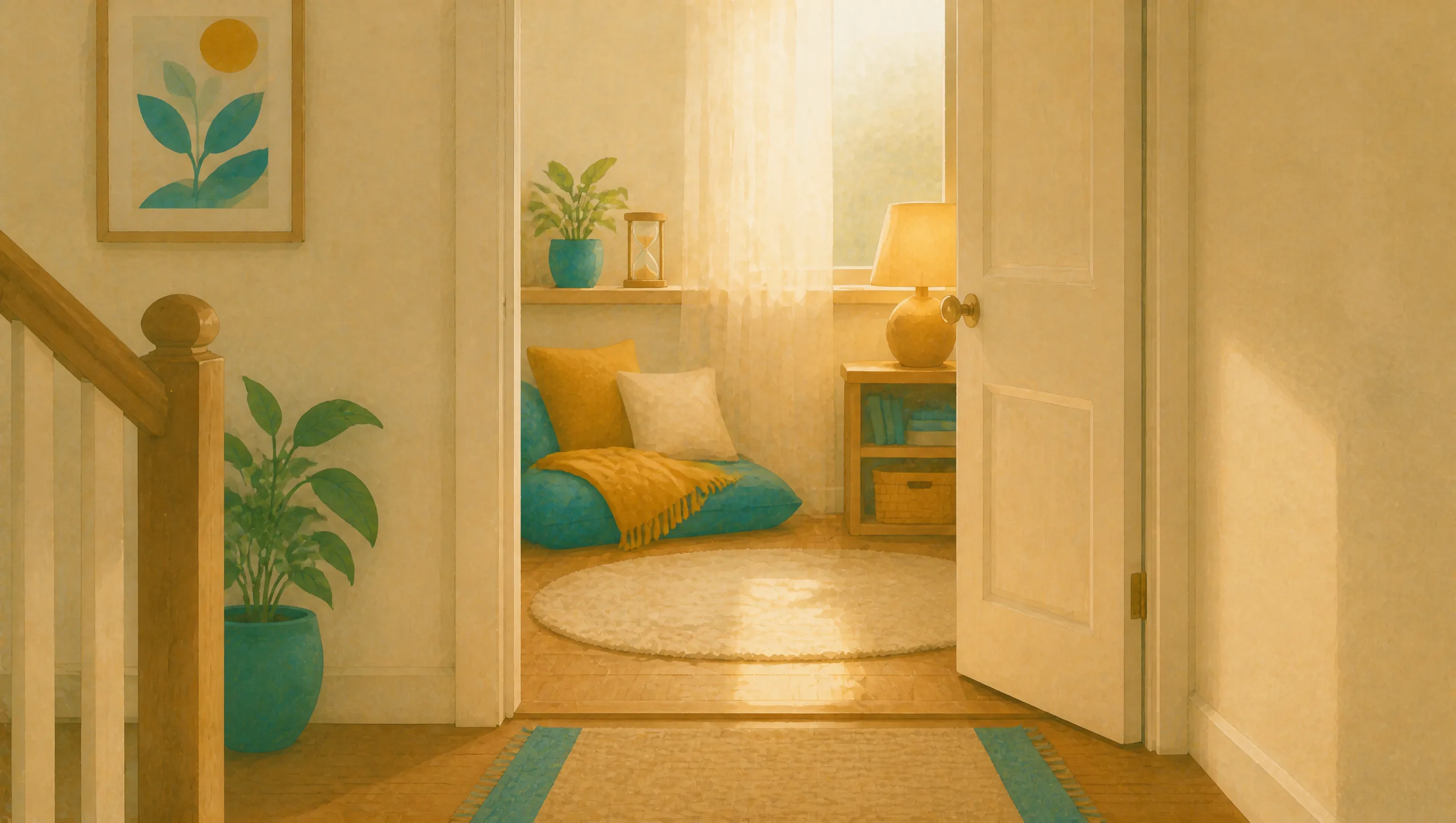
A hallway with a staircase and potted plants leading through an open door into a cosy nook with a blue floor cushion, round rug and soft lamplight.

The short answer

A sensory-friendly home is not a particular colour scheme or a house full of equipment. It is a home where avoidable sensory barriers have been reduced around the activities your family needs and wants to do. Map one difficult routine in the room where it happens. Separate sound, light, touch, smell, movement, body signals, unpredictability and social demands. Change the environment or task before buying products: alter timing, reduce competing input, make tools easier to find, offer a usable exit and protect recovery. Ask each family member what helps and what their non-negotiable needs are. Trial one or two changes and review participation, comfort and recovery. The aim is not a permanently quiet home. It is shared space with enough choice, predictability and retreat for the people who live there.

  • Design around activities and barriers rather than a fashionable image of a sensory room.
  • Timing, storage, lighting, sound and task changes often cost little or nothing.
  • A low-input space must be chosen and usable, never a place of punishment or exclusion.
  • Shared rooms need agreements that include siblings and adults as well as the child in distress.
  • Review whether family members can participate more comfortably, not whether the home looks calm.

Home is not one sensory environment. The bathroom contains echoes, water, touch and temperature. The kitchen combines smells, appliances, food and conversation. A bedroom can be a place for sleep, play, clothes and recovery, each with different demands.

You do not need to make every room quiet, beige or dim. Start with the activity that is not working.

Walk through an ordinary moment

Choose one repeated difficulty: getting dressed, brushing teeth, eating dinner, doing homework or settling after school. Follow it from the first cue to the point when the child can recover.

Notice:

  • light, glare, visual clutter and movement;
  • sudden, layered or continuous sound;
  • fabric, water, temperature and unexpected touch;
  • food, cleaning and body smells;
  • balance, body position and available movement;
  • hunger, thirst, pain and toilet signals;
  • waiting, uncertainty, conversation and time pressure; and
  • how much control each person has.

West Suffolk NHS describes sensory support through adapting the environment, modifying the task and developing ways to self-manage, all connected to participation in daily life [1]. This gives families more useful options than trying to change a child's response while leaving every barrier in place.

The entrance and leaving-home area

Entrances collect shoes, bags, coats, people and urgent instructions. The sensory problem may be a wet sleeve, crowded floor, scraping zip, missing item or everybody speaking at once.

Give essential items a reachable place. Keep only the current season's shoes and coats near the route if storage allows. A photograph, label or open basket can make one item easier to find; closed storage can reduce visual competition for another child. Choose according to what the user can locate.

Prepare uncomfortable clothing before the morning rush. Remove labels, test socks and layer preferred fabric under necessary outerwear. Let the child put shoes on by the door, in a quieter room or at the last possible moment. The Home Systems Pack can hold a short leaving-home sequence, but keep the number of visible steps usable.

Avoid calling instructions between rooms. Bring one next item or use one agreed cue. If the hallway becomes a collision point, stagger two family members by five minutes.

The kitchen and dining space

A kitchen can contain extractor fans, kettles, refrigeration hum, strong smells, heat and unpredictable touch from people passing. Reduce input that is not needed for that meal. Run the washing machine later, switch off the extractor when safe to do so, open a window or let food cool before the child enters.

Keep one acceptable place at the table rather than changing seats without warning. A chair against a wall may reduce movement behind the child. Another person may need a seat that allows them to stand. Place serving dishes away from someone distressed by smell, and let them use an adjoining space when eating together is inaccessible.

Do not turn every mealtime into exposure practice. A child can be present without tasting unfamiliar food. A family can connect before or after eating if the sensory demands of a shared meal are too high.

If food range, growth, swallowing, pain or nutrition is a concern, seek the relevant health advice. Room changes do not replace assessment.

The bathroom

Bathrooms amplify sound and make touch difficult to predict. The fan, flush, electric toothbrush, running water and hairdryer may overlap. Tiles can feel cold and wet floors unsafe.

Change the sequence:

  • warm the room before undressing where this is safe;
  • prepare towels, clothes and products in reach;
  • let the child control the shower head or use a jug;
  • agree before touching hair or face;
  • use an unscented product if smell is the barrier;
  • turn off one appliance before starting another; and
  • use a non-slip surface and clear route.

A timer can make water predictable for one child and increase pressure for another. Offer an end cue the child understands. For a closer investigation of water, grooming and fabric, see touch sensitivity in clothes and personal care.

Check skin, teeth, ears, constipation, urinary symptoms and other sources of pain when washing or toileting changes suddenly. Do not assume avoidance is sensory.

The bedroom

First decide what the bedroom needs to support. Sleep requires a different environment from energetic play or online gaming. Where one room does several jobs, create time boundaries or small zones rather than trying to purchase a complete sensory bedroom.

For sleep, check light from curtains, chargers and hallways; intermittent sound; temperature; bedding texture; night clothes; and smells. Keep necessary safety access. Blackout blinds are not suitable if cords create a hazard, and complete silence may make small sounds more startling.

Make the bed a place the child can leave. Weighted blankets are not a default sleep solution and must not be used overnight; weighted equipment needs specific evidence and safety decisions.

If toys and clothes compete visually with sleep, use a curtain, plain boxes or a predictable clear-down. If closed boxes make possessions disappear from the child's working memory, label or photograph them. The useful system is the one the child can operate.

Living rooms and shared space

One person may recover through silence while another needs movement, music or connection. Neither need is a character flaw.

Agree small rules for competing activities:

  • headphones for individual media at a named time;
  • a warning before vacuuming or blending;
  • a clear movement route away from breakable objects;
  • one seat where nobody touches without asking;
  • a basket for current shared items; and
  • a way to request lower sound without an argument.

Use time as well as space. Ten minutes of energetic play followed by a quieter programme may work better than demanding the room feel the same all evening. Adults and siblings also need access to visitors, conversation and ordinary household tasks. If compromise cannot happen in the same room, plan parallel spaces without blaming one child for the separation.

Homework and focused tasks

Before adding concentration tools, remove competition around the task. Put only the current materials on a plain surface. Seat the child away from a walkway or let them stand. Change overhead lighting or screen glare. Allow movement between short sections.

Some children work with background sound because it masks unpredictable household noise; others need sound reduced. Ask and compare. A visibly still child is not necessarily concentrating, and a moving child is not necessarily disengaged.

Keep the instruction separate from the environment. If the child cannot begin because the worksheet is crowded or the task unclear, a quiet room will not solve it.

Create a usable lower-input place

Bedfordshire and Luton NHS suggests that a safer, lower-input space may use reduced visual distraction, adjustable light and distance from difficult sound or smell [2]. Just One Norfolk also emphasises choice about the location and checking what the child finds comfortable [3].

This could be a tent, a chair behind a bookcase, one end of a sofa, the bedroom doorway or time alone in a shared room. It does not need special equipment.

The child must be able to enter before crisis and leave when ready. Do not lock, block or require them to stay. Do not send them there as punishment. Keep adult availability clear: some children want quiet company; others need distance. An agreed card, message or gesture can show which.

NHS autism guidance includes comfortable surroundings, management of light and noise, a quiet area and time to rest among possible supports [4]. These are options to individualise, not a blueprint for every autistic child.

Keep routes and household safety clear

Lower input should not make the home harder to navigate in an emergency. Keep stairs, doors, windows, heaters, alarms and escape routes usable. A darkened room still needs a safe route to the toilet. A hanging swing, tent or large crash cushion needs space that does not block another person's exit.

Do not alter smoke, heat or carbon-monoxide alarms to reduce distress. Plan how the child will be warned, protected from the sound and guided out during a test or real alarm. The safety signal must remain detectable to the adults responsible for evacuation.

Think about supervision when the child seeks water, climbing, heavy objects or enclosed spaces. A preferred retreat should not create a place where a young child cannot be heard or reached when necessary. Explain any non-negotiable safety check and keep it as brief and predictable as possible.

Review cords, weighted items, chewing objects and equipment using the instructions for that specific product. "Sensory" does not mean risk-free. Remove an item when it is damaged, outgrown or being used in a way the design does not support.

Renters and families on a tight budget

Many useful changes involve order and timing rather than building work:

  • move a lamp or chair;
  • use daylight and blinds differently;
  • place felt pads under scraping furniture;
  • run appliances at another time;
  • use a towel to soften an echoing surface;
  • rotate visible toys rather than buying storage furniture;
  • borrow equipment before committing; and
  • ask school or community services what can be loaned.

Ask a landlord before permanent alterations and never compromise fire routes, ventilation, electrical safety or supervision. A visual change that looks attractive online may create climbing, cord or trip hazards in your home.

Review one change at a time

Write the activity, barrier and change. Then ask:

  • Could the child begin or remain for longer?
  • Was discomfort lower?
  • Could they communicate and leave?
  • Was recovery shorter or more complete?
  • What did the change cost other family members?

Sensory responses can vary with sleep, illness, hunger and load built earlier in the day. Compare several similar occasions and keep asking the people who use the room.

A sensory-friendly home is not one that never makes noise. It is one where family members can understand the pressures, alter what is avoidable and find a workable route back into shared life.

Sources and further reading

  1. [1] West Suffolk NHS Foundation Trust. Occupational therapy for children who have sensory processing differences (accessed 4 August 2026).
  2. [2] Bedfordshire and Luton Children's Health Services NHS. Environmental adaptations for children with sensory differences (accessed 4 August 2026).
  3. [3] Just One Norfolk NHS. Supportive sensory environments (accessed 4 August 2026).
  4. [4] NHS. Supporting an autistic child (accessed 4 August 2026).