
What do grandparents need to understand about my child?
Give grandparents the practical information that helps this child feel known, safe and able to build a relationship in their own way.
The short answer
A grandparent does not need a complete course on autism or ADHD before spending useful time with your child. Begin with the child: how they show interest, answer questions, manage touch, cope with change, communicate distress and recover. Explain two or three patterns the grandparent is likely to meet and the action that helps. For example: give the visit plan beforehand, ask before hugging, use one instruction at a time and allow the child to leave the table without public comment. Make health, allergy, medication and immediate safety information explicit whenever the grandparent is responsible for care. Do not use the diagnosis to predict everything, and do not treat different behaviour with a grandparent as proof that the child or parent is exaggerating. The setting, demand, relationship and recovery may all differ. Let the grandparent build a relationship through an activity the child genuinely enjoys rather than demanding conventional conversation or affection. Protect the child's privacy and ask what they want shared where they can participate. A grandparent may have their own health, sensory or practical limits, so make requests specific and allow an honest no. Understanding is shown through changed behaviour, not perfect terminology.
- Explain this child's patterns and supports rather than a list of diagnostic traits.
- Make consent, communication and recovery part of the relationship.
- Give clear health and safety information when the grandparent takes responsibility.
- Do not compare behaviour across settings without comparing the conditions.
- Match the request to the grandparent's real capacity and role.
Grandparents may bring warmth, history, practical help and a relationship that feels different from home or school. They may also carry expectations about greetings, meals, manners and discipline that do not fit this child.
The aim is not to turn a grandparent into a specialist. It is to help them meet the child in front of them and know what responsibility they are accepting.
Begin with the relationship, not the diagnosis
Ask what the child and grandparent already enjoy together. It may be:
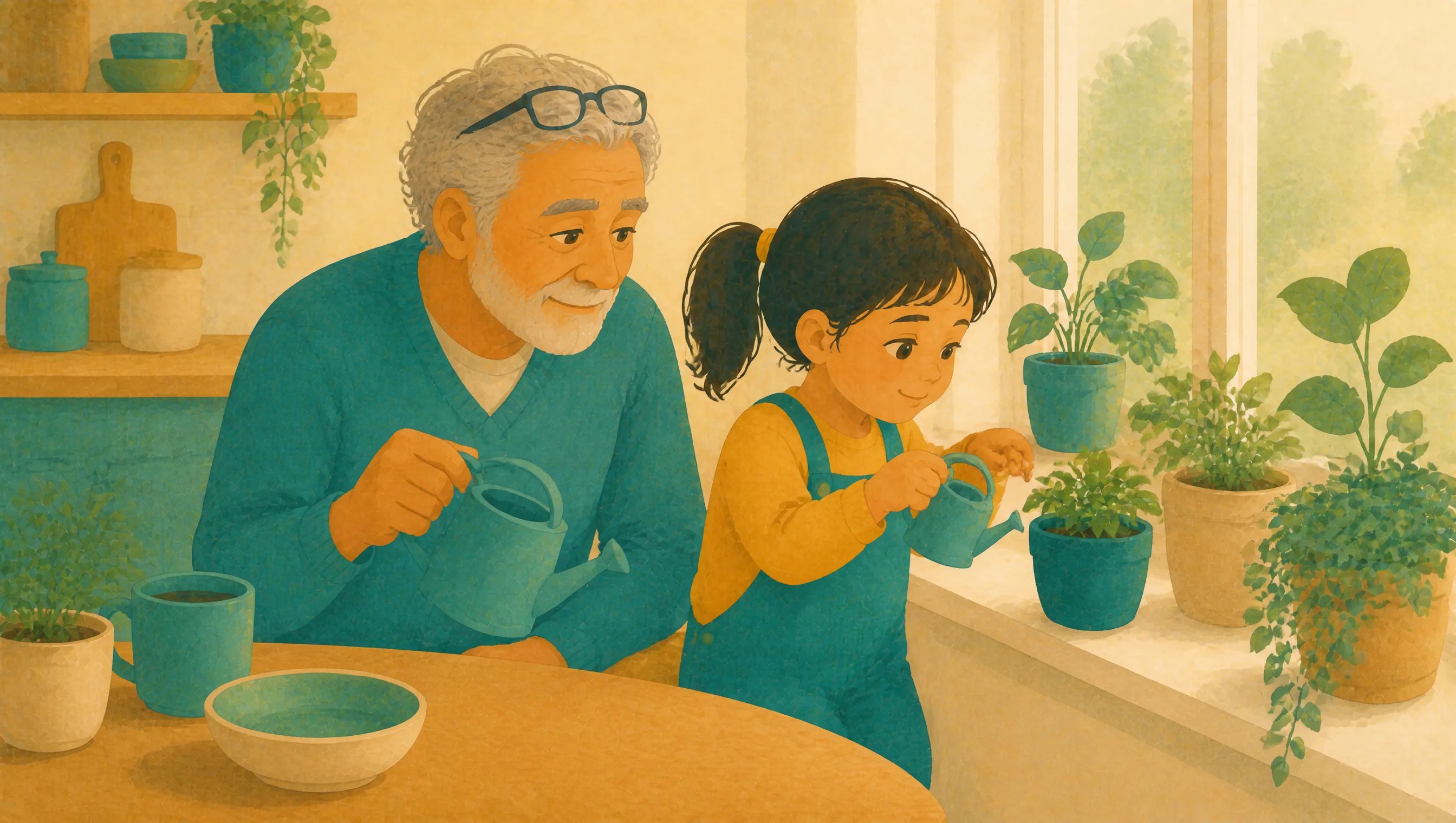
- watering plants;
- sorting a collection;
- watching a familiar programme;
- walking the dog;
- baking the same recipe;
- sitting in the same room doing separate things;
- looking at old photographs; or
- taking a short drive.
Shared activity can carry a relationship when conversation is tiring, attention moves quickly or the child does not show affection in the way the grandparent expects.
Tell the grandparent what connection looks like for this child:
He may not answer many questions when he arrives, but he will bring you the train book when he is ready to share something.
She likes sitting beside you and watching the sewing. She does not always want to join in or be touched.
This avoids making the first lesson a list of deficits.
Explain the patterns they are likely to meet
Choose two or three real situations. Use four parts:
- What tends to happen.
- What may be making it hard.
- What the child communicates.
- What action helps.
For example:
When several people ask questions at once, Jamie goes quiet and may leave. He is not being rude. Say one thing, wait and let him answer later or by message.
Priya can manage lunch more easily when she knows the food and who will be there. Send the plan the day before and do not comment on how much she eats.
Keep uncertainty honest. "We think the sudden noise is part of it" is better than presenting a guess as the child's motive.
Make communication two-way
Do not tell a grandparent only what not to do. Give them a route they can use.
Explain:
- how the child says yes and no;
- whether they need extra processing time;
- what questions are easiest to answer;
- how they ask for help;
- signs that speech is becoming difficult;
- the agreed signal for a break; and
- when to contact the parent.
A child may use fluent speech and still lose access to it under pressure. Another may communicate through gesture, movement, a device, symbols or behaviour. The grandparent should respond to the communication method available now, not wait for the child to use the preferred adult form.
If the child uses AAC, the device or communication book must remain available. It is not an optional activity to be put away during dinner or a visit.
Talk about touch and affection clearly
A grandparent may read a refused hug as rejection. Prepare both people before the greeting.
Ask whether she wants a hug, wave or no greeting. If she says no, please accept it without looking hurt or asking again.
Offer other ways to connect, but do not turn them into compulsory alternatives. A high-five is still touch. A photograph still needs consent and may create a privacy issue if it is shared.
The same rules apply when a child seeks strong physical contact. The grandparent can set their own body boundary:
I want to sit with you, but climbing on my back hurts. You can squeeze this cushion or sit beside me.
Respect works in both directions.
Prepare the sensory environment
National Autistic Society guidance describes sensory responses that can be heightened, reduced or mixed and recommends identifying individual patterns rather than assuming one profile.1
For a grandparent's home, check:
- television and radio playing together;
- ticking clocks, barking dogs or loud kitchen appliances;
- perfume, smoke or strong cooking smells;
- bright or flickering lights;
- crowded rooms and visually busy tables;
- heat and unfamiliar clothing expectations;
- where the child can move; and
- a lower-input place they may use without being followed.
Do not promise a silent home if that is not possible. Tell the child what they will meet and change the repeated barrier that costs most.
Ear defenders, a familiar object or a short visit may help. None should become a condition for the child tolerating an environment that remains overwhelming.
Separate manners from access
Grandparents may worry that support removes ordinary expectations. Name the value and adapt the form.
The value may be acknowledging another person. The form does not have to be eye contact, a spoken hello and a hug. A wave, message, gesture or joining later may serve the value.
The value may be caring for shared space. The child may need one visible task, help to start and a clear finish rather than "help Gran tidy up".
The value may be protecting belongings. That boundary remains even when adults change the wording, supervision or activity available.
This approach does not ask a grandparent to ignore harm. It helps them respond to the actual skill and access need instead of adding shame.
Do not use one good visit as a verdict
A grandparent may say, "He never does that for me" or "She eats everything here." Ask what was different:
- How long was the visit?
- Was it one-to-one?
- What happened before and afterwards?
- Did the child choose the activity?
- Was the food familiar?
- Were expectations lower?
- How much recovery happened later?
The grandparent's observation may reveal useful conditions. It does not prove the parent has invented the need or that the same child could manage a school morning, crowded gathering or full weekend in the same way.
NICE guidance asks professionals to consider communication, physical health, environment, routine and change when understanding distressed behaviour in autistic children.2 Families can use the same breadth without turning the grandparent's home into an assessment clinic.
Give full information when care responsibility changes
A social visit and sole responsibility are different jobs. Before a grandparent babysits or takes the child out, provide:
- parent and backup contact details;
- address and return time;
- allergies, health needs and emergency plan;
- medication instructions and who may administer it;
- communication and personal-care information;
- supervision and leaving-the-house boundaries;
- known risks such as running off, water, traffic or unsafe eating;
- what helps when the child is distressed; and
- when to call the parent, NHS 111 or 999.
The NSPCC advises leaving babysitters with contact numbers, emergency numbers, allergies, medical information and the location of medication.3 A concise written handover reduces reliance on memory.
Do a short trial while a parent is nearby. Let the grandparent ask practical questions. If they cannot safely carry out a medical or personal-care task, redesign the arrangement rather than relying on goodwill.
Make room for the grandparent's capacity
Grandparents may have pain, fatigue, hearing differences, medication schedules, caring responsibilities, limited transport or their own sensory needs. Ask what they can own safely.
Instead of:
Can you help more?
Try:
Could you collect Ella from art club on Thursdays and stay with her until six? She needs an adult beside her at the road and a quiet car. I will provide the route and emergency details.
An honest no is useful. It lets the family find another arrangement. Pressure can create care that is unreliable or unsafe.
Grandparents can also help without taking sole responsibility. They might cook an accepted meal, take a sibling out, sit through a phone queue, bring shopping or share a familiar activity while a parent remains present.
Tell the grandparent which information should return to the parent. A fall, missed medicine, new pain, safety incident or marked change in eating, toileting or communication needs a direct handover. Ordinary differences in play do not require a running report. The child should be able to spend time with a grandparent without feeling continuously observed for symptoms.
Protect privacy and the child's place in the conversation
Ask an older child what the grandparent may know and the words they prefer. Most grandparents do not need the diagnostic report. They need accurate information for their relationship and role.
The Blog on explaining a diagnosis to grandparents covers disclosure and privacy in detail. This article is about what changes after the conversation.
Do not discuss the child's difficulties at a family table while they listen. Arrange an adult conversation, then tell the child what was shared in accessible language.
Notice whether understanding changes the visit
After a few visits, ask:
- Does the child know the plan before arriving?
- Are greetings and touch consensual?
- Can the child communicate a break?
- Has one repeated sensory barrier changed?
- Does the grandparent know what is a parent decision?
- Can both people enjoy something without the child performing normality?
A grandparent may never use every preferred term. The practical signs matter more: less teasing, clearer notice, accepted refusals, safer care and room for a relationship that belongs to these two people.
Footnotes
-
National Autistic Society information describes varied autistic sensory experiences and possible supports. Observe the individual child and seek health advice for new pain, hearing change or other medical concerns. ↩
-
NICE CG170 applies to autistic children and young people under 19. Its recommendations support individualised assessment within that population and do not define every child's needs. ↩
-
NSPCC babysitting information is general safeguarding advice. A child with clinical or complex care needs may require training and instructions from the professionals responsible for that care. ↩
Sources and further reading
- [1] NICE. Autism spectrum disorder in under 19s: support and management. CG170. August 2013, updated June 2021 (accessed 4 August 2026).
- [2] National Autistic Society. Autism and sensory processing. Current guidance (accessed 4 August 2026).
- [3] NSPCC. Leaving your child home alone and finding a babysitter. Current safeguarding guidance (accessed 4 August 2026).