
Which sensory changes help most in an ordinary classroom?
Start with the lesson and barrier: practical changes to sound, seating, movement, visual load and exits that can be reviewed in an ordinary classroom.
The short answer
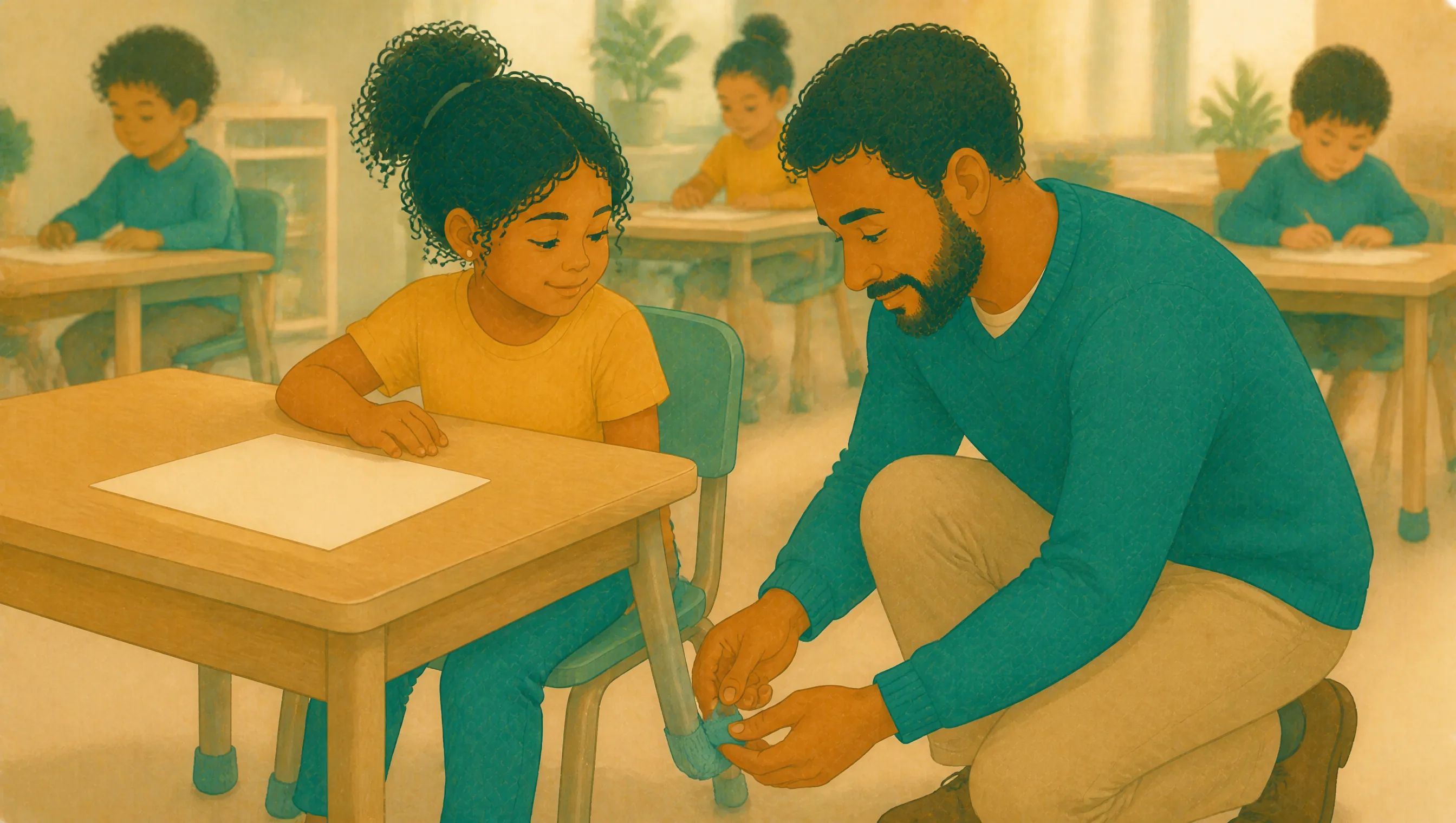
The most useful classroom change is the one that removes a named barrier in a named activity. Reduce scraping chairs, seat the child according to the actual sound or visual problem, show only the current instruction, warn about unavoidable noise, allow an agreed movement route and provide a lower-input place the child can reach before crisis. Do not assume the front, back, headphones, a fidget or a movement break helps every child. Preserve teaching, communication, safety and the needs of classmates. Record the activity, adjustment and outcome, ask the child, and review participation, distress and recovery after a short trial. A sensory audit can reveal barriers across the room, but it does not replace individual observation.
What helps, in short
- Begin with one lesson, transition or room rather than a generic sensory checklist.
- Seating depends on the barrier; there is no universally best place.
- Movement, fidgets and hearing protection need a defined purpose and review.
- The child's way to request a pause must work before speech becomes difficult.
A classroom cannot be silent, empty and still. It can stop adding avoidable barriers to the lesson.
The strongest starting question is not "Which sensory equipment should we buy?" It is "What prevents this pupil from taking part in this activity?"
Name the lesson and the barrier
"The classroom is overwhelming" is important but broad. Trace one sequence:
- During independent writing, people pass behind the pupil and chairs scrape.
- During carpet time, unexpected touch and a blocked view make it hard to follow.
- At lesson change, instructions continue while books, bodies and noise move at once.
- In assembly, entry through the crowd is harder than sitting at the side.
Include a comparison. Can the pupil do the same work in a quieter room? Is the task still difficult with fewer people? Do they manage the room when the worksheet has one section rather than a crowded page?
Bedfordshire and Luton NHS recommends considering light, sound, visual displays, seating, timing and access to quieter space, while recognising that a sensory audit will not capture every individual concern [1].
Choose seating from the problem
There is no sensory seat that suits everyone. Near the teacher may make language easier but expose a pupil to the interactive whiteboard. The back may reduce the feeling of being watched but increase visual movement. Beside the door can offer an exit or create constant corridor distraction.
Let the pupil try two realistic positions. Ask about sound, sight, touch, movement and access to help. Measure whether they can start, follow and finish the activity, not whether they sit still.
Keep a seat or standing place consistent enough to find. Do not use the agreed seat as a reward or remove it for unrelated behaviour.
Reduce competing information
Small whole-class changes can help:
- pads on chair legs that scrape;
- only current materials on the work surface;
- one instruction displayed while pupils act on it;
- a plain background behind key text or objects;
- verbal instructions given before equipment starts moving;
- advance warning of alarms, visitors or room changes; and
- a short pause after a transition before new teaching begins.
NELFT NHS encourages schools to record which approaches were tried and their effect on the pupil or group [2]. An uncluttered desk may help one child find materials but leave another unable to remember where closed-away items are.
Give movement a route and a purpose
Movement may support attention, comfort, communication or escape from an overloaded place. Agree where it can happen safely: standing at the desk, taking a message, stretching at the back or using a short corridor route with an adult plan.
Do not make a child earn a necessary movement break by finishing inaccessible work. Equally, do not prescribe movement at fixed times without asking whether it helps. A break that interrupts a preferred task or sends a pupil into a noisier corridor can add load.
A fidget might occupy the hands while listening. Define the purpose, choose one that does not make distracting sound and teach staff how the pupil will use it. Review access to the lesson. "They looked calmer" is not enough.
Protect sound without losing communication
First reduce preventable noise or move the activity. Warn before the vacuum, hand dryer, music or alarm. Let the pupil enter assembly before chairs move or leave a lesson before the corridor fills.
If ear defenders help for a defined event, agree how the pupil will hear teaching and safety information, and when they can choose to remove them. Persistent or painful sensitivity to everyday sound deserves health advice. The longer guide to noise sensitivity separates hearing, health and environmental questions.
Make the exit available early
A lower-input place only works if the pupil can reach it before crisis. Agree a card, gesture, message or spoken phrase. State where they may go, which adult knows, how safety is maintained and how return will happen.
The space must not be seclusion or punishment. The pupil should not have to display escalating distress to prove they need it. Some will want an adult nearby; others need fewer people. Ask.
West Suffolk NHS frames sensory strategies around adapting environment and task and developing self-management, with outcomes linked to everyday participation [3]. The exit is therefore part of access to school, not the end of the plan.
Review a small plan
Put three lines in the pupil's shared sensory profile:
| Activity | Adjustment | Review question |
|---|---|---|
| group change | chair pads and advance warning | can the pupil remain and hear the next instruction? |
| writing | end seat and one visible section | can they begin and complete more comfortably? |
| assembly | early entry and exit card | can they attend with less distress and recovery time? |
Review after a short, stated period with the pupil, family and staff who teach them. Keep what improves access, change what creates another barrier and stop what has no useful effect.
The best classroom adjustments are often unremarkable. They make the lesson easier to enter without making the child repeatedly explain why they need the door.
Sources and further reading
- [1] Bedfordshire and Luton Children's Health Services NHS. Environmental adaptations for children with sensory differences (accessed 4 August 2026).
- [2] NELFT NHS Foundation Trust. Children’s Occupational Therapy - School Life (accessed 4 August 2026).
- [3] West Suffolk NHS Foundation Trust. Occupational therapy for children who have sensory processing differences (accessed 4 August 2026).
The Family Reset System
Need more than one answer?
Membership opens the full FamilyFX Library and brings the articles together with eight modules, fourteen deep guides, practical packs, document-building tools and My FamilyFX. It costs £79.99 a year, and NeuroFX patients can use an access code for a free first year.
See what is included →