
Why is my neurodivergent child so anxious, and what helps?
Practical ways to respond when an autistic or ADHD child is worried, avoidant, irritable or overwhelmed, and when to seek more help.
The short answer
Anxiety may look like repeated questions, irritability, avoidance, control, sleep difficulty or physical complaints rather than a child saying they feel worried. Begin with the situation, not a generic calming technique. Reduce avoidable sensory, language and uncertainty load; give one clear next step; and help the child communicate what their alarm is predicting. Do not force them through panic or remove every difficult activity indefinitely. Keep a manageable route back through smaller planned steps. Seek professional help when anxiety persists, worsens or restricts school, sleep, eating, relationships or leaving home. Autism or ADHD does not explain anxiety away, and anxiety support may need adapting to the child's communication, sensory and developmental profile.
What helps, in short
- Anxiety can appear through behaviour, body symptoms and avoidance.
- First reduce avoidable barriers and make the next step clear.
- Reassurance should add useful information rather than become an endless loop.
- Persistent or restricting anxiety deserves professional assessment.
An anxious child may not say, “I am worried.” They may ask the same question 20 times, refuse to leave, become furious over a small change, need a parent constantly nearby or complain of a stomach ache before school.
Respond to the alarm first. Work out its full explanation later.
Make the next minute clearer
When anxiety is high, long reasoning adds more language to an already overloaded system. Give one piece of accurate information and one reachable action:
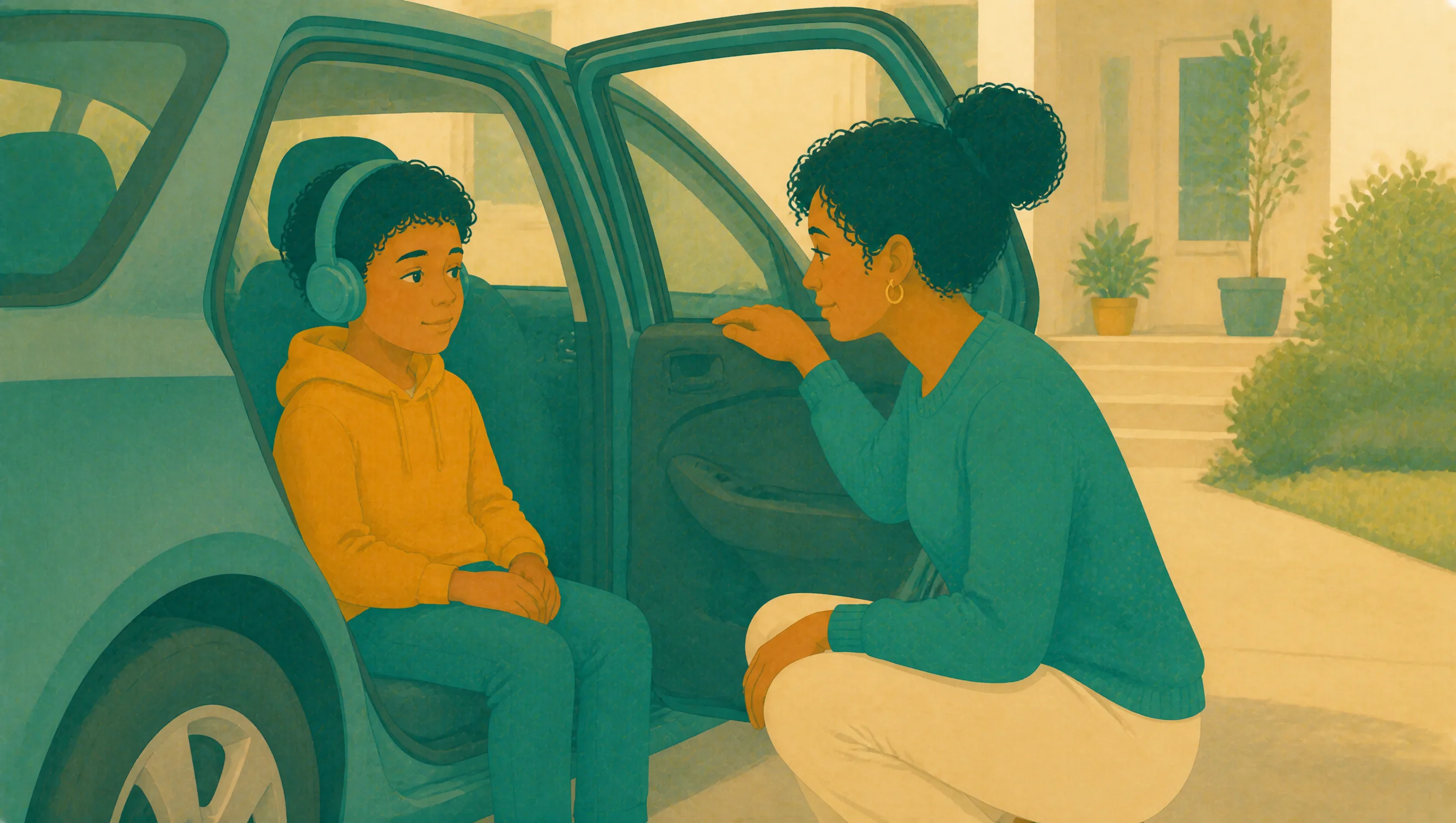
The appointment is still happening. We are only walking to the car now. You can sit in the back without talking.
Avoid promises you cannot keep. “Nothing bad will happen” may create another question. “I do not know how long the wait is, but I will show you every ten minutes and you can use your headphones” gives honest structure.
Check what the situation is demanding
Anxiety may be part of a wider picture. Noise, pain, unclear language, social threat, working-memory load and unpredictable endings can all make a situation harder. Autism and ADHD can also coexist with an anxiety disorder; one diagnosis should not explain the other away [1, 2].
Ask four small questions rather than “Why are you anxious?”
- Is there something you think may happen?
- Does anything hurt or feel too loud, bright or close?
- Is a part of the plan missing?
- Which step feels impossible to begin?
Offer writing, pointing or answering later. A child in distress may not have words available even when they can explain well at another time.
The Library guide to anxiety and neurodivergence overlap explains how to record the pattern for assessment.
Reduce load without closing life
Change barriers that serve no useful purpose: move to a quieter waiting place, shorten the spoken instruction, show the order, allow more processing time or make the first task smaller.
At the same time, preserve a route towards important and chosen activities. That route may be a photograph today, a two-minute visit tomorrow and meeting one trusted person later. Forcing a child through panic is not treatment. Removing every difficult place can also leave their world smaller.
When anxiety is severe or persistent, ask a qualified professional to help plan this work. NHS guidance includes counselling and cognitive behavioural therapy among possible treatments, depending on age and cause [1]. NICE says CBT for autistic children may need more visual and concrete information, breaks and parent involvement [2].
Use reassurance carefully
Reassurance is useful when it supplies missing facts or connection. It becomes less useful when the same certainty has to be produced repeatedly and never settles the question.
Agree a response:
We checked the travel plan together. The next update is at six. I know the waiting is uncomfortable, and I am staying with you.
If repeated reassurance is tied to a feared catastrophe or rigid ritual, describe the pattern to a professional rather than abruptly refusing every answer. The guide to OCD and autistic routines explains why this distinction needs care.
Review after recovery
Later, record the trigger, the child's words or other communication, body symptoms, sensory conditions, what adults did and how long recovery took. Ask what helped and what made it worse.
Look for impact across school, sleep, eating, friendships, family life and leaving home. NHS guidance recommends professional help when anxiety is persistent, worsening or interfering with daily life; a GP is a reasonable starting point [1]. Speak with school when education is affected.
Seek urgent help if the child talks about suicide or self-harm, cannot be kept safe or is in immediate danger.
Check the body's contribution
Pain, hunger, constipation, illness, medication effects and poor sleep can increase distress or look like anxiety. A child who finds internal body signals hard to identify may communicate these through behaviour rather than a clear complaint.
Notice changes from the child's usual pattern and include physical symptoms when speaking with the GP. Do not assume every stomach ache is anxiety or that every anxious response will resolve through a medical check. Both physical health and emotional experience deserve attention.
Basic support still matters during a difficult moment: offer water or food if appropriate, reduce heat and noise, allow the toilet, check for pain and protect sleep. These actions are not a cure for anxiety. They remove pressures that make it harder for the child to use any other support.
A useful next step
Choose one recurring anxious moment. Write down the missing information, avoidable load, smallest next step and the child's way to pause. Use that plan once, then ask the child what you misunderstood.
The aim is not to make fear disappear on command. It is to help the child feel believed, reduce the pressure you can change and keep the right route open for further support.
Sources and further reading
- [1] NHS. Anxiety disorders in children (accessed 4 August 2026).
- [2] NICE. Autism spectrum disorder in under 19s: support and management (accessed 4 August 2026).
The Family Reset System
Need more than one answer?
Membership opens the full FamilyFX Library and brings the articles together with eight modules, fourteen deep guides, practical packs, document-building tools and My FamilyFX. It costs £79.99 a year, and NeuroFX patients can use an access code for a free first year.
See what is included →