
Is this anxiety, or is it part of my child's neurodivergence?
How anxiety can overlap with autistic and ADHD experiences, what information helps assessment and what families can change without waiting for a label.
The short answer
Anxiety can exist alongside autism or ADHD, and the same outward behaviour can have more than one explanation. Avoidance may reflect fear, sensory pain, uncertainty, task difficulty or several pressures together. Parents do not need to decide which label applies before offering support. Record what the child anticipates, what happens in their body, the situations involved, how long the response lasts and what helps. Reduce avoidable barriers while keeping important life accessible in manageable steps. Seek professional help when worry or avoidance persists, worsens or restricts sleep, eating, learning, relationships or ordinary daily life. Assessment should consider anxiety and the child's wider neurodevelopmental profile rather than forcing one explanation to replace the other.
- Anxiety and neurodivergent distress can overlap or occur together.
- The pattern before, during and after an event is more useful than one behaviour.
- Reduce sensory, communication and task barriers without dismissing possible anxiety.
- Persistent or restricting anxiety deserves appropriate professional assessment.
- Support for anxiety may need adapting to the child's communication and sensory profile.
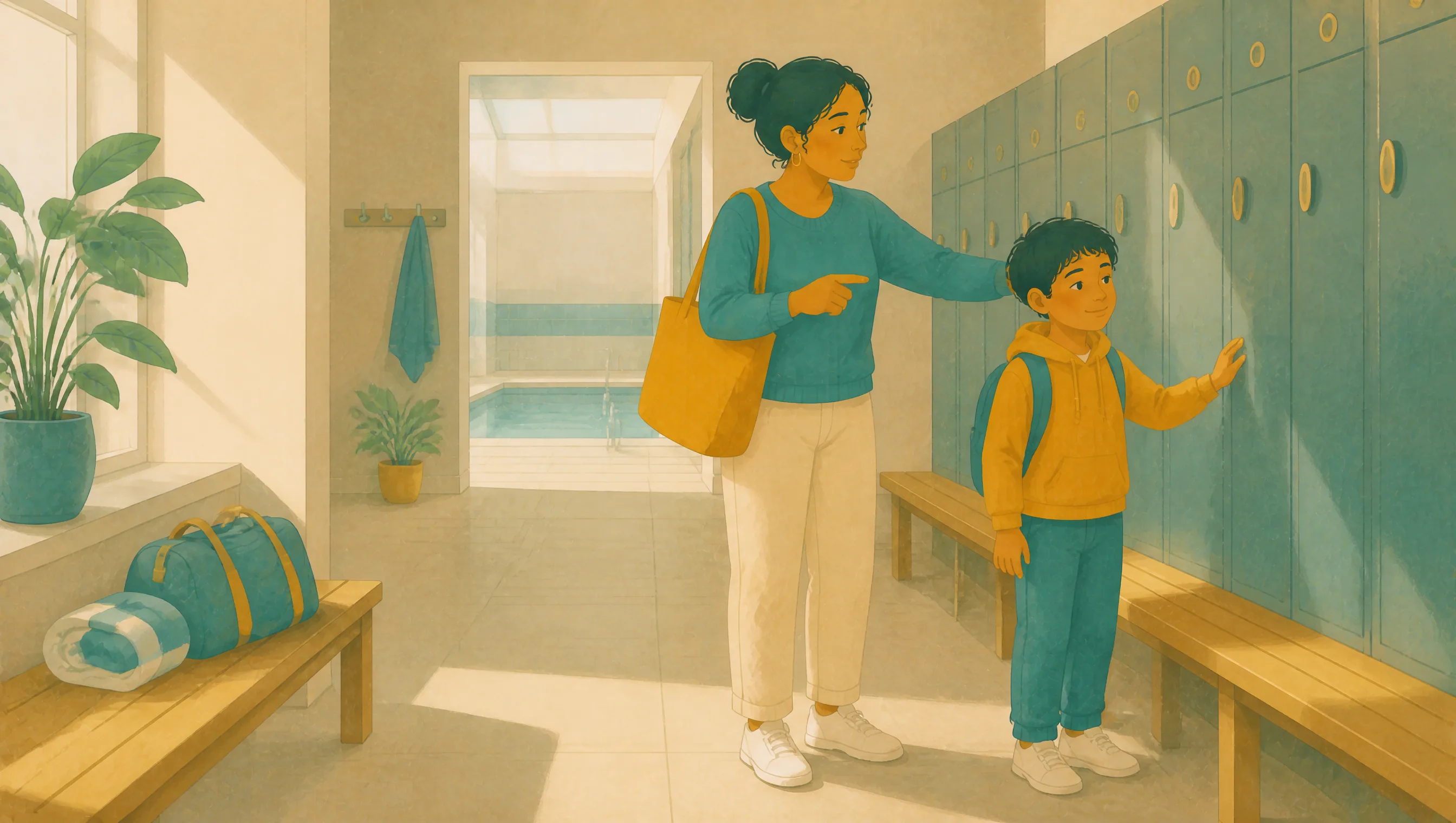
A child refuses school on swimming day. They say their stomach hurts, cannot get dressed and become furious when anyone mentions leaving. Is this fear? Sensory distress? A difficult transition? Worry about being watched? A memory of something that happened last week?
It could be one of these. It could be several. The immediate job is not to win an argument about the correct explanation. It is to understand the pattern well enough to reduce distress and find the right help.
Anxiety is not the opposite of neurodivergence
Autistic children and children with ADHD can also experience anxiety disorders. NHS guidance notes that anxiety becomes a concern when it affects a child's thoughts or behaviour and interferes with home, school or social life [1]. NICE guidance asks professionals supporting autistic children to consider coexisting anxiety alongside communication, physical health, sensory conditions, changes and the surrounding environment [2]. ADHD assessment and support should also include coexisting emotional and developmental needs [3].
A diagnosis of autism or ADHD therefore does not settle every later difficulty. Nor does anxiety make a neurodevelopmental need disappear. A child may fear a classroom because they expect humiliation, find its noise painful, struggle to follow rapid language and feel anxious about all three.
The same behaviour can carry different information
Avoidance, repeated questions, irritability, silence, pacing, stomach pain, sleeplessness and needing a parent close can all occur with anxiety. They can also appear when a child is overloaded, confused, unable to initiate, physically unwell or trying to escape an inaccessible demand.
One visible sign cannot tell you the cause. Look at the whole sequence:
- What does the child expect will happen?
- Is there a particular place, person, sensation, task or uncertainty?
- Does the response begin when the event is mentioned, on arrival or only during it?
- What physical feelings does the child notice?
- Does leaving bring brief relief, full recovery or continued worry?
- Does the same pattern occur in more than one setting?
A child who cannot answer these questions verbally may show the pattern through drawings, messages, play, choices, behaviour or information shared later. NICE guidance for social anxiety specifically says children should have ways to respond through writing, drawing or a parent when speaking to an unfamiliar professional is difficult [4].
Ask what the fear is predicting
Anxiety often points towards a feared outcome: “I will get it wrong,” “Mum will not come back,” “Everyone will look at me,” or “I will be sick.” The prediction may be clear, vague or felt mainly in the body.
Neurodivergent distress may centre on what the situation is already doing: the hand dryer hurts, the instruction has six steps, nobody has explained when the lesson ends, or the social rules are impossible to read. That distress can still generate anxiety about the next encounter.
Do not use this as a home diagnostic test. Children may not know or disclose the feared outcome, and sensory or executive demands can become the subject of genuine anticipatory anxiety. The distinction is useful because it suggests better questions, not because it delivers a label.
Change barriers while you gather information
You do not need to withhold practical adjustments until a clinician decides whether anxiety is present. If noise, language, waiting or uncertainty is contributing, reduce it.
For the swimming example, that might mean:
- seeing the changing area when it is empty;
- knowing who will be present and where the parent waits;
- using quieter changing arrangements;
- receiving the lesson sequence in writing or pictures;
- choosing suitable ear protection away from the pool itself; or
- agreeing a first visit that ends before entering the water.
An adjustment does not prove the distress was sensory rather than anxiety. It removes avoidable load so the remaining difficulty is easier to understand. It may also make psychological help more accessible.
Avoidance solves today and can narrow tomorrow
Leaving a frightening situation can bring immediate relief. If every difficult place then disappears from the child's life, the range of places that feel possible may shrink. At the same time, forcing a child through sensory pain, confusion or panic is not a therapeutic exposure plan.
Hold both truths. Protect the child from avoidable harm and keep a route back to important, chosen activities through smaller, planned steps. The right step might be looking at a photograph, visiting for two minutes, meeting one person outside or completing only the predictable first part.
If anxiety is severe or an anxiety disorder is suspected, ask for professional help rather than inventing a treatment programme. NHS guidance describes talking therapies, including cognitive behavioural therapy, among possible treatments; what is offered depends on the child's age and the cause and severity of the anxiety [1]. NICE recommends adapting CBT for autistic children who can engage with it, including more visual information, concrete structure, breaks and parent involvement [2].
Record patterns without making the child perform
A short record is more useful than a long account written only after a crisis. Include:
- the situation and what had already happened that day;
- the child's words, messages or other communication;
- sleep, hunger, illness, pain or medication changes;
- sensory and social conditions;
- what adults did;
- what allowed recovery; and
- how long the impact lasted.
Do not repeatedly recreate distress to test a theory. Use naturally occurring information and the child's account. Ask school what they see before a difficult lesson, not only whether the child eventually enters it.
Patterns may show that anxiety is broad, such as worry across school, sleep and separation. They may show one access barrier, such as distress only in a room with unpredictable noise. They may show both.
Physical symptoms belong in the account. Headaches, nausea, a racing heart, dizziness or urgent toilet needs may accompany anxiety, sensory overload, illness or more than one of these. Take new, severe or persistent symptoms seriously rather than deciding from behaviour alone that they are "just anxiety". At the same time, a normal medical check does not make the child's bodily experience imaginary.
Timing can help adults ask better questions. Does discomfort begin while anticipating the event, only after entering a particular environment, or during recovery later? Does it ease when uncertainty is reduced but remain when the sensory condition continues? These patterns do not diagnose the cause. They help a clinician, school and family see what needs investigating and which adjustments can be tried safely now.
What helps can add information, but not a diagnosis
Notice the effect of support without treating the response as proof. If a written plan reduces distress, the child may have needed predictability, less spoken language or reassurance that the feared event has an end. If a quieter room helps, noise may have been painful, distracting or associated with earlier difficult experiences. If staying close to a trusted adult helps, that person may provide safety, communication support or a reliable route out.
Write the observation narrowly:
When the lunchtime room was changed to the library, Sam ate and returned to class. He said he was still worried about sitting with other pupils.
This preserves two pieces of information: sound mattered and social worry remained. “It was sensory, not anxiety” would discard the second. “He managed once, so the anxiety has gone” would discard what he said.
The same care applies when a strategy does not help. Breathing slowly may be difficult during sensory overload. A visual plan may not resolve fear of bullying. One unsuccessful tool tells you about that tool in that moment, not whether the child's distress is real.
Support can be calm without being dismissive
“There is nothing to worry about” asks a child to distrust their alarm without giving them new information. “You never like change because you are autistic” closes the enquiry too early.
Try:
Your body is telling us this does not feel safe yet. I believe that it feels real. We can make the next step smaller and find out which part needs to change.
Offer concrete information, one reachable action and a way to pause. Avoid demanding a detailed explanation while the child is highly activated. Return to the conversation after recovery, using whatever communication form works.
When to ask for more help
Seek help when worry or avoidance is persistent, worsening, or interfering with school, family life, friendships, sleep, eating, healthcare or leaving home. A GP is a reasonable starting point, and school should be involved when education is affected [1]. Bring your brief record and explain the effect on daily life, not only the behaviour seen at its worst.
Ask the assessor to consider:
- anxiety symptoms and feared outcomes;
- autism, ADHD and the child's communication profile;
- sensory and environmental barriers;
- learning, language and motor needs;
- bullying, loss, trauma or major change;
- pain, sleep and physical health; and
- what differs between settings.
If the child talks about suicide or self-harm, may be unable to keep themselves safe, or is in immediate danger, seek urgent help through the appropriate NHS urgent mental-health route or emergency services.
A useful next step
Choose one recurring difficult situation. Write four lines: what the child may be expecting, what the environment is doing, what their body or behaviour communicates, and what reduces the pressure without closing the activity completely.
Share those four lines with the child in an accessible way. Let them correct you. Then take the revised account to school, the GP or the professional already involved.
You are not trying to prove whether the experience belongs to anxiety or neurodivergence. You are building a description that allows both to be understood and supported.
Sources and further reading
- [1] NHS. Anxiety disorders in children (accessed 4 August 2026).
- [2] NICE. Autism spectrum disorder in under 19s: support and management (accessed 4 August 2026).
- [3] NICE. Attention deficit hyperactivity disorder: diagnosis and management (accessed 4 August 2026).
- [4] NICE. Social anxiety disorder: recognition, assessment and treatment (accessed 4 August 2026).