
Is it my child or the setting? Spotting a mismatch between demands and needs
How noise, pace, language, uncertainty, social pressure and task design can make behaviour differ between settings, with practical ways to test the mismatch.
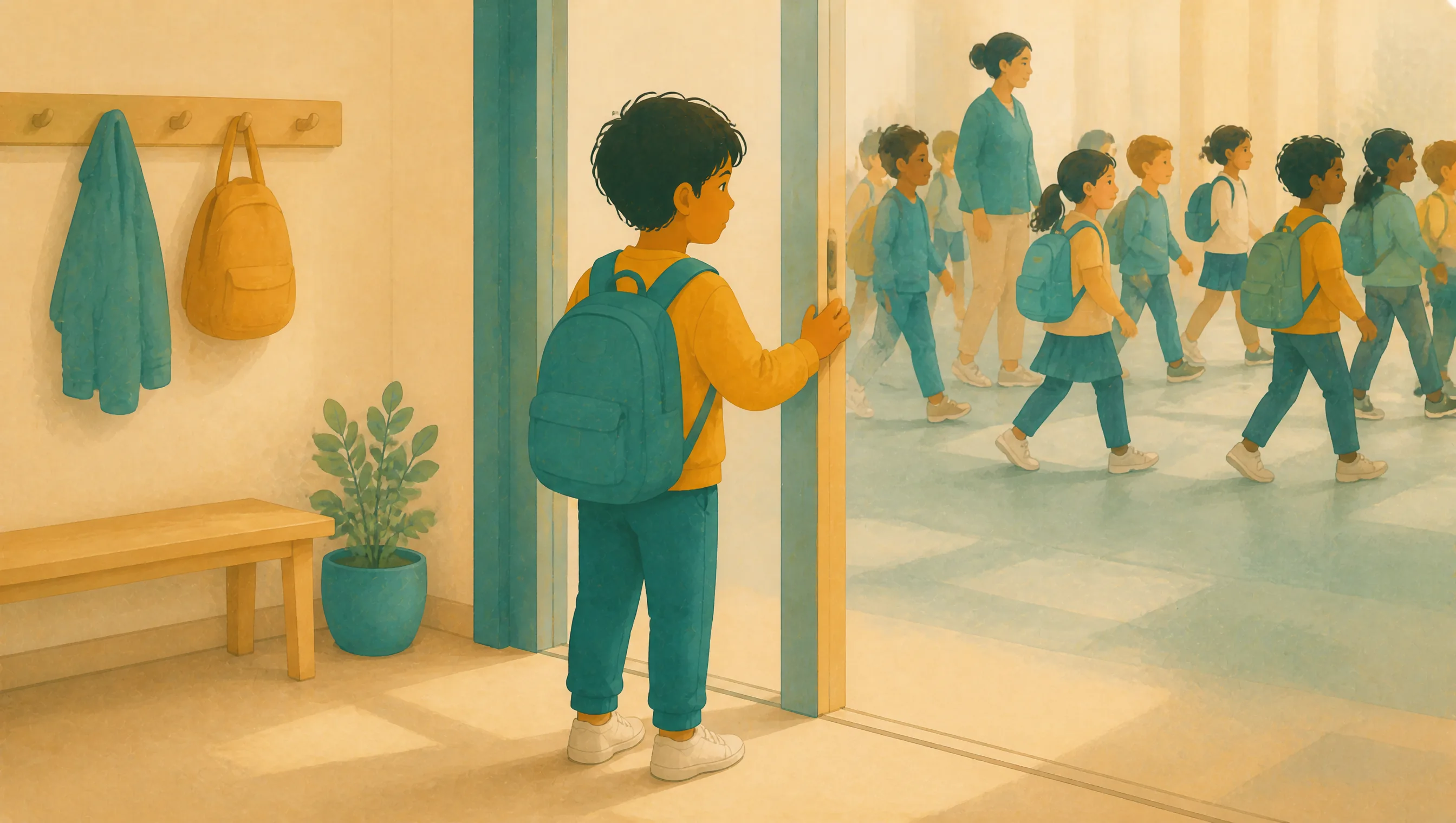
The short answer
Behaviour that appears in one place and not another often reflects a difference in demands, support or recovery rather than a different child. Compare noise, light, crowding, pace, language, predictability, task length, social exposure, movement, hunger and the help already built into each setting. Include what happens afterwards: a child may complete the school day and release the cost at home. Change one feature while preserving the necessary outcome, then review participation, distress and recovery as well as completion. An environmental explanation does not rule out a developmental, mental-health or physical-health need, and an adjustment is not proof that all expectations should disappear. It shows which conditions make access more possible.
- Different behaviour across settings is information, not proof that one account is wrong.
- Compare hidden support and aftermath as well as visible demands.
- Change one environmental feature and measure the whole effect.
- Keep necessary outcomes while altering inaccessible delivery.
- Sudden change or signs of illness still need health consideration.
You have read your 3 free articles
Continue reading with FamilyFX membership
We keep three articles free so you can see whether FamilyFX is written for you before you pay for anything. Membership opens the full Library, all eight modules, fourteen deep guides, eight practical packs and eight tools for £79.99 a year.
Already a member? Sign in and this page opens straight away.
NeuroFX patients can use an access code for a free first year. Enter it on the join page.