
How do I set up a bedroom that helps my child sleep?
A room-by-room-style sleep check for comfort, light, sound, safety and predictability, using the child’s actual experience rather than an ideal-bedroom checklist.
The short answer
Start with the child’s real barrier, not a picture of a perfect bedroom. Check the room at bedtime and during any waking: mattress and bedding comfort, clothing, temperature, light, small or changing sounds, smells, visual distraction, access to the toilet and what alters overnight. Ask what the child needs to see, hear or feel; darkness, silence and minimal décor are not calming for everyone. Make one safe, reversible change at a time and record whether settling, waking, distress or support needs improve. Keep blind cords, plastic bags, medicines, charging leads and other hazards inaccessible, preserve a safe exit and make any night-time route visible enough to use. Avoid weighted or enclosed sleep products unless they are suitable for the child and can be used safely. A better room can remove environmental barriers, but it cannot treat pain, breathing problems, a shifted sleep schedule or every persistent sleep difficulty.
- Test the room from the child’s position and at the time difficulty occurs.
- Prioritise safety, physical comfort and a usable route at night.
- Choose light, sound and visual input for the individual child.
- Make one affordable reversible change before buying specialist equipment.
- Keep medical, breathing and schedule concerns separate from bedroom design.
A sleep-friendly bedroom does not have one correct colour, temperature or amount of silence. It is a room in which this child can be physically comfortable, know what to expect and move safely when they wake.
Before redecorating, find the actual barrier. A different pillow may matter more than new paint. A dim orientation light may be more helpful than blackout blinds. Sometimes the room is not the main problem at all.
Audit the room from the bed
Lie or sit where the child sleeps, with their permission. Check the room at bedtime and, if waking is predictable, at that time too.
Notice:
- what touches the child’s skin and body;
- whether the mattress and pillow still fit their size and position;
- heat, cold, draughts and changing temperature;
- direct light, moving shadows and small illuminated controls;
- steady and intermittent sounds;
- smells from laundry, toiletries, cooking or pets;
- what can be seen from the pillow;
- the route to a parent, toilet or safe resting place;
- what switches on, off or changes overnight.
Ask the child specific questions or offer choices. “Would you like the door open a little or closed?” is easier to answer than “Is your room relaxing?” Watch for pulling at clothes, avoiding one side of the bed, covering ears or repeatedly checking the doorway.
NICE recommends that sleep assessment for an autistic child considers background noise, blackout blinds, bedroom screens and room sharing alongside health, medication and the broader sleep pattern.1 The point is assessment, not a compulsory shopping list.
Make the bed physically usable
Check the mattress for damage, sagging and whether the child has outgrown it. Notice neck, joint or back discomfort and how the child positions their body. Medical, postural or mobility needs may require advice from an occupational therapist, physiotherapist or clinical team rather than improvised equipment.
Offer tolerable bedding and sleepwear. Seams, labels, elastic, wrinkles, dampness, fabric and duvet weight can matter. One child wants firmly tucked bedding; another needs their feet free. Follow observed comfort.
Do not pile on weighted products because pressure is described as calming. Check sensory products before buying them. A child must be able to breathe freely, regulate temperature and remove bedding. Avoid enclosed arrangements that restrict movement or safe exit unless they are purpose-designed and professionally assessed for the individual need.
Choose light for orientation and comfort
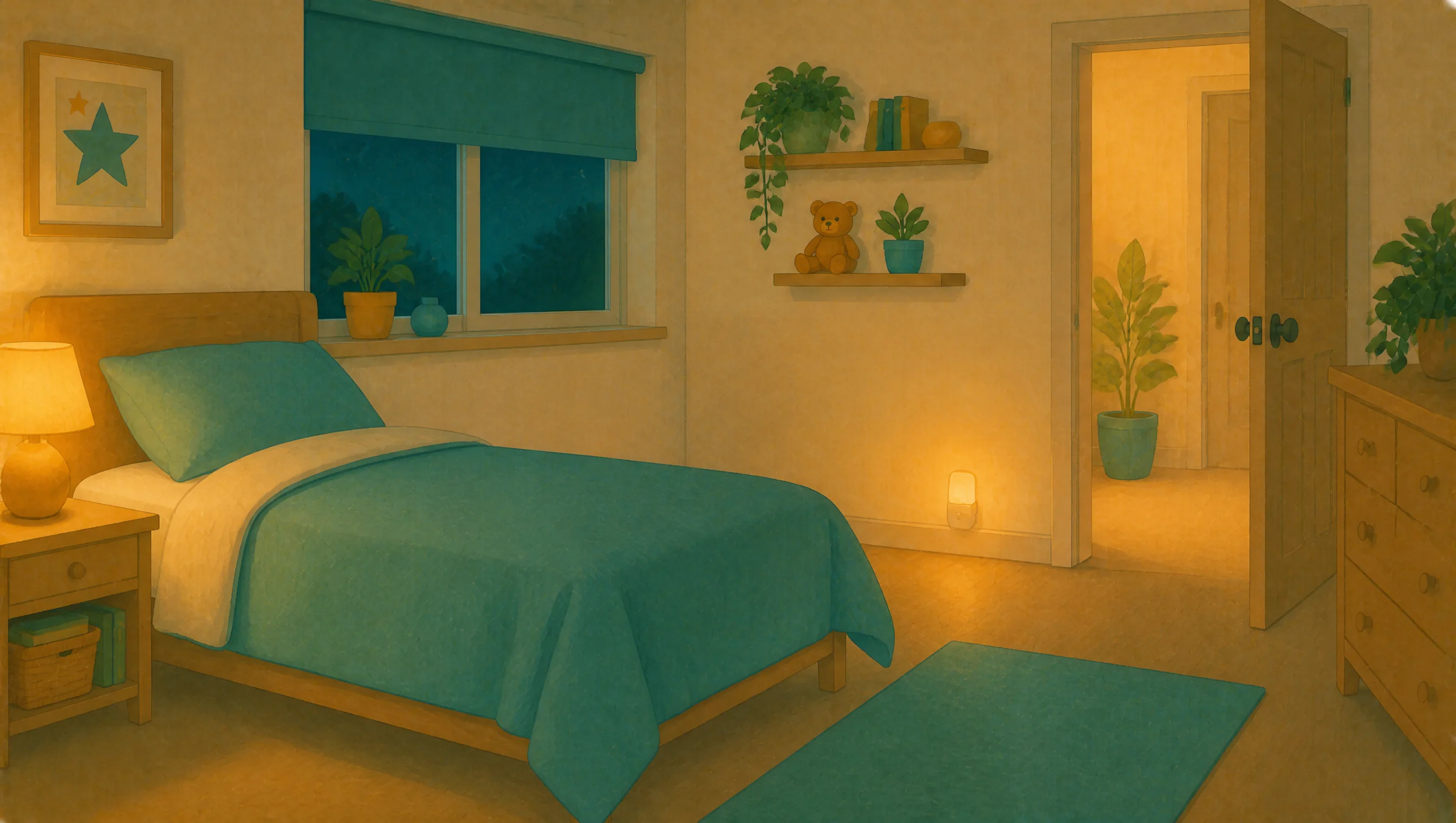
Reduce glare and bright or flashing light where it is disturbing. Blackout curtains or blinds may help when dawn light or a streetlight is the identified cause. Total darkness may frighten or disorientate a child, particularly if they wake and cannot locate the room.
A steady dim light may be the accessible choice. Position it so the child can see what they need without light shining directly into their eyes. Keep leads and devices safe and use products designed for unattended overnight use.
Check blind safety. RoSPA advises against looped blind cords in a child’s bedroom and warns that dangling cords can cause strangulation.2 Use cordless products where possible and follow current product-safety advice for existing fittings. Do not make a home alteration that creates a new hazard.
Work with sound rather than demanding silence
Listen for traffic, pipes, alarms, pets, siblings, notifications and appliances. Intermittent or unpredictable sound may be harder than a steady low sound. Alter the source first where possible: move the clock, soften a closing door, silence notifications or shift a household task.
Some children prefer a quiet consistent background sound because it makes other noises less abrupt. Keep any sound low, predictable and safely positioned. Oxford Health CAMHS notes that comfort, light and sound are relevant features of the bedroom and acknowledges that some young people need a little steady light or sound.3
Do not assume earplugs or ear defenders are safe or tolerable for overnight use. Consider age, skin, communication, hearing, emergency awareness and discomfort when lying down. If hearing protection is being considered for sleep, seek appropriate advice.
Check temperature where the child sleeps
The hallway thermostat does not show how the child feels under their bedding. Notice sweating, cold hands or feet, kicking off covers, seeking a wall or waking when heating changes.
Use ordinary layers that can be adjusted and avoid placing the bed directly against a strong heat source or draught where practical. A fan or heater introduces sound, airflow, cable and safety considerations; follow the product guidance and never block it with bedding.
There are general recommended bedroom-temperature ranges, but individual medical and sensory needs vary. Aim for comfortable rather than pursuing a number while the child is clearly too hot or cold.
Reduce conflict, not personality
A bedroom does not have to look minimal. Collections, posters, colours and objects may provide familiarity and identity. Ask whether something is genuinely distracting or frightening at night before removing it.
If visual activity is the barrier, create a calmer line of sight from the pillow, cover one shelf or place school materials out of view. Avoid stripping the room while the child is absent. Their bedroom is also personal space.
Where play, schoolwork and sleep share one small room, use signals rather than impossible zoning: close the laptop, put work into a box, cover one active area or change the light. The transition matters more than owning a separate desk.
Do not use the bedroom or an early bedtime as punishment. A child asked to associate the room with exclusion and distress may not experience it as a safe descent into sleep.
Make night-time movement safe
Clear the route to the door and toilet. Secure rugs and remove trip hazards. Provide enough orientation light for the child who needs it. Keep medicines, plastic bags, cables, button batteries and age-relevant choking or strangulation hazards inaccessible. RoSPA particularly highlights blind cords, plastic bags and medicine storage in bedtime safety guidance.2
Preserve emergency escape. Do not lock a child into the bedroom. If wandering, climbing, seizures, medical equipment or significant mobility needs create risk, seek individual professional advice; generic room tips cannot balance every hazard.
If the child shares a room, include the other child's sleep and safety. A screen, quiet alternative space, agreed lighting or different timing may help, but avoid making either child carry the whole adjustment.
Work with the room available
Many children share bedrooms, sleep in rented homes or use one room for play, homework, dressing and rest. Helpful changes do not require a dedicated sleep suite. Focus on the child's view from the pillow, the immediate bed space and the few conditions that matter most.
Use removable, affordable changes where possible: reposition one lamp, place school materials in a closed box, use a familiar pillowcase, stop one notification or agree when a sibling uses brighter light. Ask a landlord before altering fixtures, and do not compromise ventilation, fire safety or a safe exit.
When a child needs medical equipment, charging equipment or monitoring, clinical instructions take priority over aesthetic advice. Ask the responsible team how to position cables, devices and supplies safely. Do not switch off or move equipment because it looks visually busy or makes a sound.
Take photographs or a short written list if you need professional advice. Show where the child sleeps, the route they take when awake and the specific barrier you are trying to solve. Avoid including the child in photographs without their agreement where they can consent.
Keep helpful conditions sustainable
Notice what is present when the child falls asleep and what disappears later. If sound stops on a timer or an adult leaves, the change may matter when the child briefly wakes. That does not mean every condition must remain forever; it means changes should be planned rather than surprising.
Choose arrangements the household can reproduce on ordinary nights and, where possible, away from home. Create a reduced version: familiar pillowcase, small safe light, downloaded audio or a simple picture of the sequence.
Test before buying
Choose one low-cost, reversible experiment:
- state the barrier you are testing;
- change one thing;
- keep the rest of the routine stable;
- record settling, waking, distress and support for several nights;
- ask the child what changed;
- keep, adapt or remove it.
Borrow or improvise safely before buying specialist décor where possible. A folded ordinary blanket beside the body may test a positioning preference; it should not be used to restrain or create unsafe sleep. A temporary covering over one bright display may test visual distraction.
A bedroom change is worthwhile when it removes a real barrier and remains safe and manageable. It does not have to produce instant sleep to be informative.
Review it after seasons, growth or family arrangements change. A duvet that worked in winter may overheat in summer; a low bed that was accessible may become too small; a sibling's new timetable may alter sound. Reassessment is ordinary maintenance, not evidence that the previous adjustment failed.
Keep the boundary clear
The room can support sleep; it cannot make sleep happen on command. It cannot treat reflux, toothache, breathing disturbance, delayed sleep-wake phase or a medication effect. Investigate what changes during the night and take persistent or concerning patterns to the GP.
The best setup is not the most neutral, silent or expensive room. It is a safe, accessible bedroom shaped by the child’s actual experience and tested carefully enough that the family knows what helps.
Footnotes
-
NICE CG170 includes the sleep environment within a broader assessment of sleep problems in autistic children and young people. ↩
-
RoSPA bedtime safety guidance warns about blind cords, plastic bags and accessible medicines in children’s sleep spaces. ↩ ↩2
-
Oxford Health CAMHS identifies comfort, temperature, light, sound and room associations as practical features to review and notes that some young people prefer low light or sound. ↩
Sources and further reading
- [1] NICE. Autism spectrum disorder in under 19s: support and management. 2013; last updated June 2021; reviewed September 2025 (accessed 4 August 2026).
- [2] Oxford Health NHS Foundation Trust CAMHS. Bedroom environment. Reviewed February 2024 (accessed 4 August 2026).
- [3] Royal Society for the Prevention of Accidents. Bedtime safety tips for children. Current online guidance (accessed 4 August 2026).