
FamilyFX: The Family Reset System

Why does my child refuse baths, hair washing and teeth cleaning?

How to identify the exact sensory, pain, movement, communication or predictability barrier in personal care and build a workable hygiene routine.
By FamilyFXWritten March 2026Published 6 August 2026Last reviewed 8 July 2026Next review due 8 July 20278 min readReviewed by FamilyFX
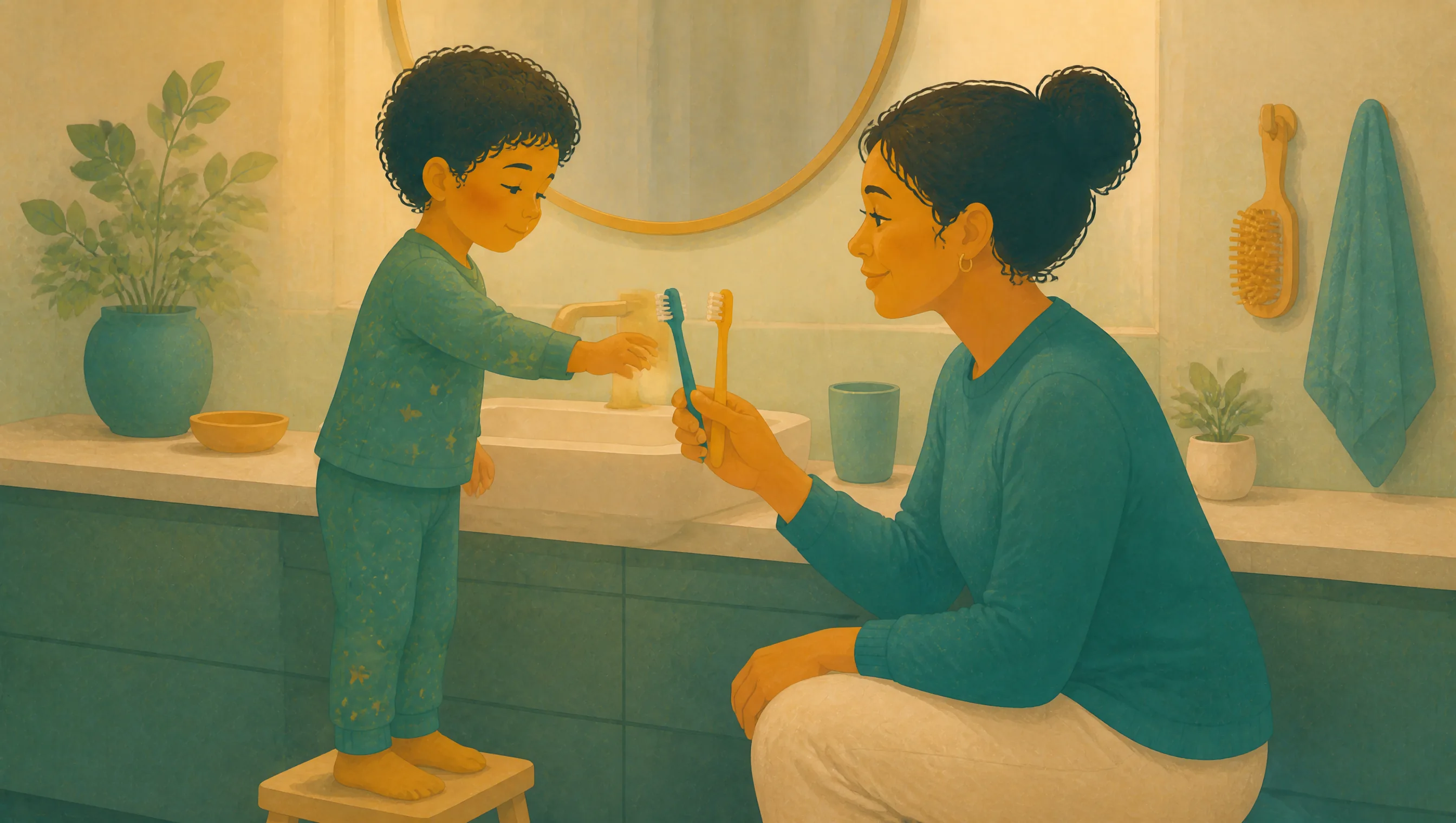
A woman kneeling beside a child who stands on a step stool at a bathroom sink, holding out two toothbrushes as the child reaches towards the tap.

The short answer

Refusal of personal care may protect a child from pain, sensory distress, loss of control, an unclear sequence or a physical task they cannot manage. Separate bathing, hair care and toothbrushing: each contains different sensations and health needs. Watch for the first difficult moment, such as entering the room, undressing, water temperature, tipping the head, shampoo smell, tangles, toothpaste taste, gum pain or not knowing when the task will end. Check skin, scalp, mouth, teeth and ears for pain or illness. Then change one variable, show the sequence, offer real choices within the necessary task and let the child control safe parts such as the flannel, shower head or toothbrush. Break care into the smallest effective routine while building tolerance gradually. Dental cleaning still needs proper advice; ask a dentist for a tailored mouth-care plan and adjustments when brushing is persistently difficult. Seek health advice for pain, bleeding, swelling, injury, infection, sudden refusal or significant deterioration.

  • Treat bathing, hair care and toothbrushing as separate tasks with separate barriers.
  • Check pain and health before describing refusal as sensory or behavioural.
  • Change one feature at a time and record whether it helps.
  • Offer control over safe details without presenting necessary care as a false choice.
  • Ask dental and occupational professionals for tailored help when access remains poor.

Bath night starts hours before the water runs. Your child hears the plan and disappears, argues, freezes or becomes distressed. By the time you reach the bathroom, both of you are braced for a struggle. Toothbrushing may last ninety seconds but dominate the whole evening.

“They hate personal care” is understandable shorthand. It is not yet an explanation. Washing a body, rinsing hair and cleaning teeth ask very different things of a child. Find the first difficult part of each one.

Check whether something hurts

New or sharply increased refusal needs a health check, particularly when a previously manageable task becomes impossible.

Look for:

  • toothache, bleeding gums, a broken tooth, mouth ulcers or sensitivity to hot and cold;
  • ear pain that worsens when water enters or the head moves;
  • eczema, broken skin, rashes, infection or painful water temperature;
  • scalp soreness, tangles, lice or a product reaction;
  • neck, shoulder, hand or balance difficulty; and
  • fear following a slip, injury, choking or painful care experience.

Do not test pain by pushing through the task to see whether the child protests. Ask, observe and seek dental or clinical advice. A child who cannot locate or describe pain may communicate it through sudden avoidance, aggression, withdrawal or protecting one side of the body.

Map the task from the child's point of view

Write the sequence in more detail than “have a bath”. It might be:

  1. stop a preferred activity;
  2. enter a warm, echoing room;
  3. undress and feel cold air;
  4. step over a high bath edge;
  5. sit on a slippery surface;
  6. tolerate water moving across the skin;
  7. accept another person's touch;
  8. cope with soap, smell and temperature;
  9. get out wet and cold;
  10. dry, dress and return to the evening.

Hair washing adds water near the eyes and ears, head tipping, scalp touch, shampoo, rinsing and tangles. Toothbrushing adds flavour, foam, bristles against gums, a hand near the face, spit and a precise sequence inside the mouth.

Observe where the child's body changes: covering ears, guarding the mouth, holding breath, gripping, gagging, running away or becoming still. Ask one concrete question: “Is it the water on your face or your head going back?” A child may answer by showing rather than speaking.

NELFT's paediatric occupational therapy resources treat bathing, hair care and toothbrushing as distinct everyday activities when considering sensory access.1 That is a useful discipline: do not assume the same adjustment will solve all three.

Change one variable at a time

When everything has become difficult, families often buy several products, move the time, add music, introduce a visual chart and change the adult all at once. If the next attempt goes better or worse, nobody knows why.

Choose the most likely barrier and test one safe change across several attempts:

  • run the bath before the child enters to remove the sudden noise;
  • use a shower, basin wash or flannel if immersion is the main barrier;
  • agree the water depth and check temperature together;
  • provide a non-slip surface and safe way in and out;
  • replace a strong-smelling product with an appropriate unperfumed option;
  • keep hair washing separate from body washing;
  • use a cup or visor to reduce water across the face;
  • let the child hold the shower head at a safe pressure; or
  • try a suitable smaller or softer toothbrush and tolerable toothpaste after dental advice.

West Suffolk's paediatric occupational therapy guidance similarly suggests predictable routines and practical changes such as managing water near the face.2 These are options to test, not a universal sensory programme.

Record what changed and what the child managed. “Used the cup and kept eyes dry; rinsing was possible” is more useful than “good bath”.

Give control over real parts of necessary care

Do not ask “Do you want to brush your teeth?” if not brushing is not a genuine option. False choices create conflict when the adult later withdraws them.

Offer choices you can honour:

  • before or after pyjamas;
  • bathroom or another suitable room;
  • blue or green toothbrush;
  • child starts or adult starts;
  • top teeth or bottom teeth first;
  • flannel or sponge;
  • music or quiet; and
  • a spoken countdown or visual sequence.

State what is fixed: “Teeth need cleaning tonight. You can choose where and which brush.” Then listen if the child communicates pain or inability. A boundary does not remove the obligation to adjust the task.

Where safe, let the child control the cloth, water or brush. An adult may still need to complete part of the care. Explain before touching, use the same short language and stop at the agreed point unless there is an immediate health need that has been planned differently with a professional.

Find the smallest effective version

On a low-capacity day, distinguish the health purpose from the usual ritual. A full bath with hair washing may not be necessary every time body cleaning is needed. A focused wash, clean clothes and hair care on another day may protect hygiene without combining every difficult sensation.

This is not an argument for leaving dental plaque or a painful skin problem unattended. Toothbrushing has a specific preventive job. NHS England's oral-health standard supports tailored mouth-care plans and reasonable adjustments for autistic children and young people and those with a learning disability.3 Ask a dentist what an effective minimum and gradual plan should look like for your child.

Avoid inventing substitutions that sound easier but do not clean effectively. Mouthwash, chewing gum, wiping teeth or a novelty brush may not replace the care the dentist recommends. Product suitability, fluoride and technique belong in the dental plan.

Practise outside the hardest moment

Urgency makes learning harder. Explore an empty bath when washing is not due. Let the child handle the shower controls while clothed. Practise tipping the head with no water, or brush a model's teeth before approaching the mouth.

Break the sequence at the earliest difficult point. If the child tolerates the toothbrush touching the front teeth but not entering the side of the mouth, that is the current information. Build from there according to professional advice rather than extending by surprise.

Preparation must not become a disguised restraint exercise. The aim is familiarity, communication and usable care, not teaching the child to stop showing distress.

Keep the ending predictable

A child may tolerate discomfort better when they can tell how much remains. Use a visible sequence with a clear final step, a song of known length or a simple count that the adult honours. Avoid resetting the count because the child moved.

Show what happens afterwards: towel, clothes, drink, story. Warm the room or towel if the transition out of water is the hardest part. Have every item ready so the child is not left wet while an adult searches.

If two adults use different methods, agree the essentials. Consistency should mean the same warning, choices and ending, not forcing the child into exactly the same performance every night regardless of capacity.

Match the routine to available capacity

The hardest time may be the conventional time rather than the task itself. A child who has held themselves together through school may have little capacity for hair washing before bed. Toothbrushing immediately after waking may collide with nausea, medication timing or the rush to leave.

Map when care is most possible across an ordinary week. Moving a bath, separating hair care or preparing the toothbrush before a transition can reduce load without lowering the health standard. Keep any change realistic for the household; a plan that requires an unhurried hour every morning will not survive.

When care varies between homes, agree the health essentials and share the child's communication and useful adjustments. Do not make the child account for what happened in the other household. If one setting can complete care and another cannot, compare the room, timing, products, adult help and sequence before concluding that the child is choosing whom to cooperate with.

Ask for professional help when you cannot identify the barrier, when equipment or movement is unsafe, or when cleaning remains ineffective. A dentist owns oral-health assessment. A GP can investigate pain or skin concerns. Occupational therapy routes vary, but functional difficulty with everyday care can be described without requesting a presumed sensory diagnosis.

Protect dignity and the relationship

Personal care involves intimate touch and exposure. Use the child's preferred words, cover parts of the body not being washed where practical, explain who will help and allow increasing privacy as skills develop. Do not film distress, joke about smell or discuss refusal with others in front of the child.

If care repeatedly reaches kicking, hitting, restraint or panic, the plan is not workable. Step back, deal with immediate safety and obtain relevant health, dental or occupational advice. Routine force can increase fear and still fail to deliver effective care.

Progress may be a child identifying that mint burns, washing their own arms, allowing a dentist to look, or completing one section of brushing with help. These are not evasions. They are the information and skills from which reliable personal care is built.

Your child still needs clean skin, cared-for hair and protected teeth. They also need adults to understand what each task asks of their body. Hold on to both truths: keep the health purpose clear, and change the route until care becomes possible without a nightly battle.

Footnotes

  1. NELFT's paediatric occupational therapy resource library provides separate guidance for bathing, hair care and toothbrushing within everyday sensory and functional support.

  2. West Suffolk's paediatric occupational therapy bathing resource describes practical environmental and predictability adjustments, including ways to manage distress around water near the face.

  3. NHS England's oral-health standard promotes tailored mouth-care planning and reasonable adjustments for autistic children and young people and those with a learning disability in special educational settings.

Sources and further reading

  1. [1] NELFT NHS Foundation Trust. Children's Occupational Therapy: Understanding Sensory Processing. Current paediatric occupational therapy resources (accessed 4 August 2026).
  2. [2] NHS England. Clinical standard: oral healthcare for autistic children and young people and/or those with a learning disability in special educational settings. October 2023; updated February 2024 (accessed 4 August 2026).
  3. [3] West Suffolk NHS Foundation Trust. Paediatric occupational therapy: Bathing. Current paediatric occupational therapy worksheet (accessed 4 August 2026).