
FamilyFX: The Family Reset System

Why is toilet training so hard for my neurodivergent child?

How to separate bowel and bladder health from the sensory, communication, movement and sequencing skills involved in learning to use a toilet.
By FamilyFXWritten March 2026Published 6 August 2026Last reviewed 8 July 2026Next review due 8 July 20278 min readReviewed by FamilyFX
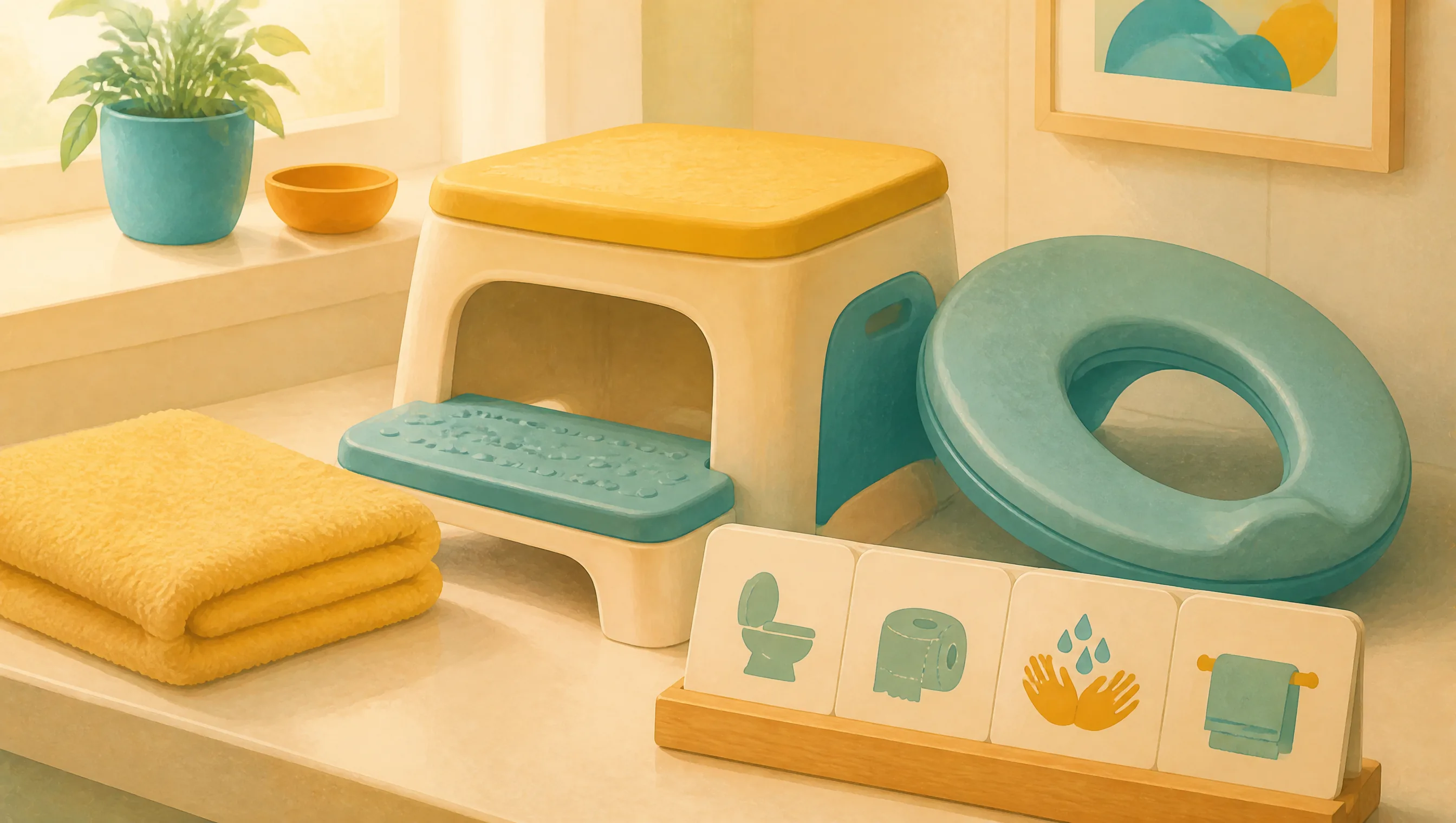
A yellow and teal step stool, a round padded toilet seat insert, a folded towel and four picture cards showing toilet, paper, handwashing and towel routines on a windowsill.

The short answer

Using a toilet is not one skill. A child has to notice a bladder or bowel signal, interrupt what they are doing, reach an acceptable bathroom, manage clothing, sit securely, relax, wee or poo, clean themselves and return to the day. Pain, constipation, urinary symptoms, unclear body signals, sensory distress, communication differences, movement difficulty, fear and an unpredictable routine can each interrupt that sequence. Begin with bowel and bladder health, then watch the whole process to find the first step that breaks down. Make sitting physically secure, use one clear communication system, practise individual steps outside an urgent moment and build neutral toilet opportunities into familiar transitions. Accidents are information, not misbehaviour. Ask a GP or health visitor about constipation, pain, recurrent urinary symptoms, a new loss of continence or another health concern, and seek specialist continence or occupational support where access and physical safety require it.

  • Toilet use is a chain of body, movement, communication and sequencing skills.
  • Check constipation, pain and urinary health before treating accidents as a learning problem.
  • Find the first difficult step rather than repeating the whole routine more forcefully.
  • Secure seating, supported feet and consistent communication can remove practical barriers.
  • Keep accidents neutral and protect privacy at home and in education.

Your child can recognise every letter in their name, operate a tablet and explain the rules of a favourite game, yet still have no warning before an accident. Or they know exactly when they need to go but will only use one toilet, in one position, with one adult nearby.

This can look inconsistent until you stop thinking of toilet training as one developmental milestone. Using a toilet is a long chain. A child may understand the purpose perfectly and still be unable to complete one link in time.

Start with the body, not the training plan

Pain changes how a child responds to the toilet. A hard or painful poo can lead to holding; holding can make the next poo harder and more painful. Runny soiling can be overflow around retained stool rather than diarrhoea or a deliberate accident.

Look for:

  • fewer than three poos in a week;
  • hard, large stools or small pellets;
  • straining, pain or bleeding with a hard poo;
  • hiding, stiffening, crossing legs or standing on tiptoe to hold;
  • abdominal pain or poor appetite that improves after a poo;
  • smears or larger amounts of soiling; and
  • a new change in bladder or bowel pattern.

The NHS advises taking a child to the GP when constipation is suspected and explains that treatment depends on age.1 NICE recommends clinical assessment and a non-punitive approach alongside treatment, rather than relying on diet or a behaviour chart.2

Also raise pain on weeing, repeated urinary symptoms, unusual thirst, weight loss, vomiting, weakness or a child who seems unwell. Do not begin intensive toilet practice while an untreated physical problem is making release painful or unreliable.

Break the sequence into its real parts

Watch one ordinary toilet visit and note where help becomes necessary. The sequence may include:

  1. noticing pressure in the bladder or bowel;
  2. deciding what the sensation means;
  3. stopping an absorbing activity;
  4. communicating the need or acting independently;
  5. reaching a free and acceptable toilet;
  6. managing doors, fastenings and clothing;
  7. sitting or standing securely;
  8. relaxing enough to release;
  9. recognising when the body has finished;
  10. wiping, dressing, flushing and washing hands.

“Not toilet trained” tells you none of this. “She notices only when urine has started,” or “He reaches the toilet but cannot release with his feet unsupported,” gives you somewhere to begin.

Do not insist on independence at every step. A child can learn to notice and sit while an adult handles clothing. Once those parts are reliable, practise the next. Support is not cheating; it keeps the difficult link from swallowing the whole task.

Do not wait for one perfect sign of readiness

Readiness lists can be useful, but a child with communication, movement or body-awareness differences may not display them in the expected way. Waiting for the child to ask verbally, remain dry for a particular interval and show interest may leave the family waiting for skills that need to be taught or supported.

Instead, ask practical questions:

  • Can the child sit safely, with support if needed?
  • Is there a way for them to understand and communicate “toilet”?
  • Is their bowel pattern comfortable enough for learning?
  • Can an adult create regular opportunities without force?
  • Is there enough stability to notice what helps?

Preparation can begin before nappies or pads are removed. The child can enter the bathroom, sit clothed, practise clothing, learn the sequence or choose a communication symbol. This is not a race to underwear.

Make the position secure

A child cannot easily relax while trying not to fall. On a toilet, use an appropriate reducer seat if needed and provide firm foot support. Feet should not be left swinging. Check whether the child can get on and off safely and whether clothing can be moved without losing balance.

If physical disability, low tone, coordination or posture makes ordinary equipment unsafe, ask about occupational therapy, physiotherapy or a relevant continence service rather than improvising unstable supports. ERIC advises seeking occupational therapy assessment where a child cannot sit safely and comfortably on the family toilet.3

A potty may feel safer for one child; another may resist a later move from potty to toilet. Choose according to the child's access and current plan, not a rule that one route suits everybody.

Change the bathroom before asking the child to endure it

Stand in the room at the child's height. Notice the fan, echo, automatic flush, bright light, cold seat, strong fragrance, hand dryer and sight or smell of other people's waste.

Possible adjustments include:

  • leaving before an adult flushes;
  • covering an automatic-flush sensor where permitted;
  • using a quieter toilet;
  • changing the light or removing fragrance;
  • keeping paper, wipes or clothes in a predictable place;
  • using familiar equipment across regular settings; and
  • allowing enough privacy without removing necessary supervision.

Ask which part is difficult rather than announcing that the toilet is safe. Sensory discomfort may be genuine, but do not assume every avoidance is sensory. Pain, bullying, lack of privacy, inaccessible clothing or a door the child cannot lock may produce the same refusal.

Use communication that survives an urgent moment

Choose one word, sign, picture, device button or object and use it consistently. The child does not have to speak a sentence before adults respond. A symbol can mean “I need the toilet”, “take me now” or “I need help”, provided everybody knows which.

ERIC recommends consistent communication between the people supporting a child and notes that some children may use a photo, picture symbol, sign or object of reference.3

Keep instructions short and concrete. “Trousers down, sit, feet on step” is easier to process than a running explanation about trying, listening to the body and earning a sticker. A visual sequence should show only the steps this child needs, in the order used in the actual bathroom.

Use routines as external support

A child who notices the signal late or cannot disengage from play may need opportunities linked to predictable transitions: after waking, after meals, before leaving, on arrival and before sleep. These are invitations or established care routines, not long compulsory sits.

Record what happens rather than increasing frequency at random. A three-day bladder and bowel record can show timing, drinks, constipation signs, accidents and the amount of adult support. Share it with a health professional when needed.

The routine must also work outside home. Nursery or school should know the child's communication, prompt, privacy needs, equipment, clothing help and response to an accident. A child should not have to announce private information in front of classmates or wait for a scheduled break when they have communicated an urgent need.

If toilet visits have become frightening, reduce the size of the immediate goal. The next step might be entering the bathroom, sitting securely for a brief moment with clothes on, or completing the handwashing part. Keep normal continence care in place while that step is learned. Do not leave a child wet or soiled to create motivation, and do not remove a nappy or pad merely because a start date has been chosen.

A pause in one part of training does not mean abandoning the whole plan. Continue treating constipation, offering drinks, using the shared communication and making the room accessible. Agree what would show that the next step is tolerable enough to try. If distress remains intense, ask for help to understand whether pain, fear, sensory access, trauma or another barrier is being missed.

Respond to accidents without a verdict

An accident may mean the signal arrived late, the child could not stop, the toilet was unavailable, clothing took too long, constipation affected control or the plan asked for a skill they do not yet have.

Say what happened and what comes next: “Your clothes are wet. Let's get dry.” Avoid “You knew better,” “big children use the toilet” or a public record of dry and wet days. Praise can recognise a specific action the child controlled: telling an adult, sitting, moving clothing or helping put wet things in the bag.

Keep spare clothing and disposal arrangements discreet. Do not require the child to wear visibly different clothes as a consequence. If they can help with changing and cleaning, teach that as a neutral self-care skill rather than a punishment.

After a week, ask what changed. Did the child sit more securely? Communicate earlier? Release without pain? Manage one clothing step? Use the toilet in one additional setting? Fewer accidents may follow later.

If nothing changes, do not simply add rewards or longer sits. Recheck the body, the environment and the first broken link. Ask a health visitor, GP or continence professional what assessment is available. Bring the record and describe the exact support already tried.

Your child is not failing a simple lesson. They are learning a private, physical sequence that asks a great deal of the body and the environment at once. Make the body comfortable, make the bathroom usable and teach the next possible step. That is progress, even before the washing pile becomes smaller.

Footnotes

  1. NHS constipation guidance lists hard or infrequent stools, pain, bleeding, poor appetite, abdominal pain and overflow soiling among the signs that require attention, and advises seeing a GP when constipation is suspected.

  2. NICE CG99 recommends assessment for faecal impaction and an age-appropriate, non-punitive approach alongside clinical treatment for childhood constipation.

  3. ERIC's additional-needs guidance recommends consistent communication, consideration of the sensory environment and occupational therapy assessment where ordinary toilet seating is not physically safe or comfortable. 2

Sources and further reading

  1. [1] NHS. Constipation in children. Page last reviewed 2 August 2023 (accessed 4 August 2026).
  2. [2] NICE. Constipation in children and young people: diagnosis and management. 2010; last updated July 2017 (accessed 4 August 2026).
  3. [3] ERIC, The Children's Bowel & Bladder Charity. Advice about bladders, bowels and toileting for children with additional needs. Current family guidance (accessed 4 August 2026).