
My child has no friends, how can I help?
Find out whether your child feels lonely, excluded or content with less company, then choose the next step that fits the actual problem.
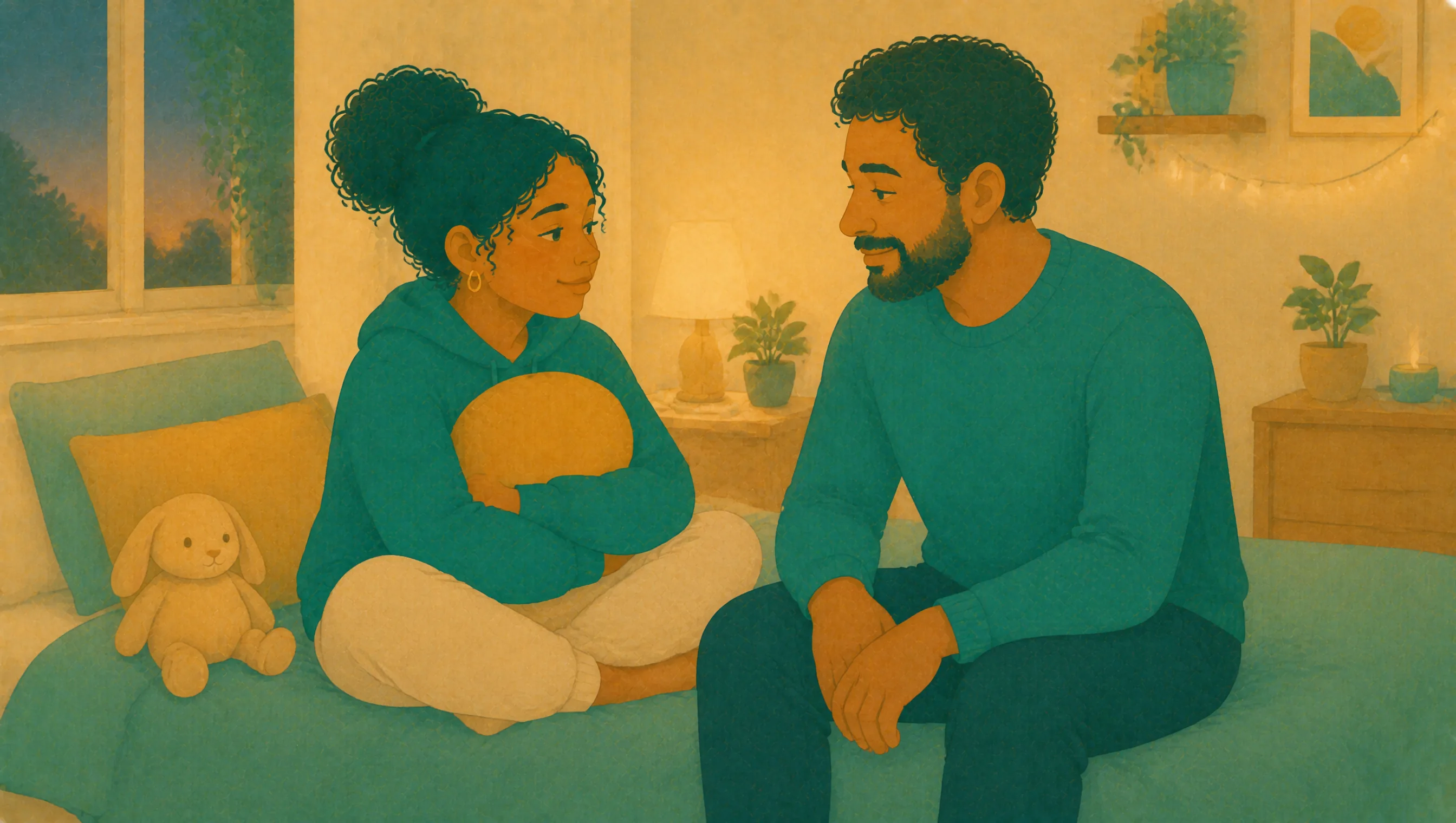
The short answer
Do not begin by persuading your child that they do have friends or arranging somebody immediately. Ask what 'no friends' means today: nobody to sit with, nobody they trust, a recent falling-out, repeated exclusion or a preference for more time alone. Ask about specific people, places and parts of the day, and let the child answer later or in writing. If they want contact, make one opportunity easier through a shared activity, smaller group or one-to-one meeting. Ask school for observations during break and lunch. Repeated intentional hurt involving a power imbalance may be bullying and needs adult action. If loneliness is persistently affecting mood, sleep, attendance or safety, seek health support as well.
What helps, in short
- Being alone and feeling lonely are different.
- Ask what happened in a particular time and place.
- Match help to the barrier instead of starting a general social-skills programme.
- Involve school when unstructured times, exclusion or bullying are part of the problem.
When a child says, "I have no friends", it is tempting to reassure them: "Of course you do. What about Alex?" The list may be factually accurate and still miss what the child is telling you.
They may mean nobody chose them at break, nobody knows them well, their closest friendship has ended or they feel alone in a group. They may also be repeating an adult worry while feeling content with their own amount of company.
Do not solve the sentence before you understand it.
Ask about a real moment
Broad questions create broad answers. Try:
- Who were you near at break today?
- Did you want somebody to join you?
- Is there anyone you feel safe being yourself with?
- Did something change with a particular person?
- Which part of the day feels most lonely?
- Do you want ideas, action or for me to listen?
A tired child may need to answer after food, rest or sleep. Offer writing, messaging or drawing the people and places.
YoungMinds explains that being alone and feeling lonely are different, and that loneliness can happen while surrounded by people.1 Respect chosen solitude without using it to dismiss a child who is asking for connection.
Find the barrier before teaching a skill
A child may want friends but find the available setting inaccessible. Busy group conversation, changing playground rules, noise, teasing and the need to respond quickly can all get between social interest and participation.
Other people may misread direct language, a delayed answer, little eye contact or the need for space. The National Autistic Society describes wide individual variation in autistic communication.2 Do not assume every difficulty sits inside the child.
Ask what would make one situation easier:
- a quieter place;
- one person rather than a group;
- a shared activity;
- a clear start and finish;
- an adult who is easy to reach;
- help clarifying a misunderstanding; or
- action on exclusion or bullying.
A new social rule will not fix hostile peers or a painfully noisy lunch hall.
Ask school what happens when lessons stop
"They talk to other children" does not establish friendship or comfort. Ask for specific observation during break and lunch:
- Where does the child go?
- Are they choosing to be alone or trying to join?
- Is there a recurring person or group?
- Can they access a quieter or structured option?
- Which adult can they approach without explaining publicly?
- What happens after an incident is reported?
Agree one change and a review date. A lunchtime activity may help if the child chooses it; it is not helpful if it becomes automatic segregation.
Distinguish falling out from bullying
A single rejection or argument can be deeply painful without being bullying. The Anti-Bullying Alliance definition includes intentional, repeated hurt and an imbalance of power.3
Record dates, exact words or actions, people present and screenshots where relevant. Do not wait for a perfect label before raising a safety concern. A serious one-off threat, assault or sexual incident still requires action.
The fuller article can help you work through exclusion or a friendship rupture, including repair, boundaries and school escalation.
Offer one opportunity, not a replacement friend
If your child wants more contact, choose something with a reason and an ending: one classmate building for forty minutes, a small interest-based group or a supervised online activity. Involve the child in choosing the person, setting and adult support.
Afterwards, ask what felt comfortable and whether they want a next time. Do not make "Did you make a friend?" the test. Friendship remains mutual, and one accessible meeting cannot guarantee it.
Take persistent loneliness seriously
Speak to school and appropriate health services when loneliness or friendship conflict is persistently affecting mood, sleep, eating, attendance or valued activities. Communication needs may warrant an individual speech and language assessment rather than generic social-skills teaching.
If your child says they do not want to be alive, talks about harming themselves or you cannot keep them safe, stay with them and seek urgent help. Call 999 or go to A&E in an emergency.
The first useful response to "I have no friends" is neither contradiction nor panic. It is a careful question about what the child is experiencing, followed by action that fits that specific problem.
Revisit the question after any change. The child, not the number of names adults can list, remains the best evidence of whether connection feels available.
For the wider framework, use Friendships, Belonging and Social Confidence.
Footnotes
-
YoungMinds provides young-person guidance on solitude, loneliness and feeling misunderstood. ↩
-
National Autistic Society guidance describes varied autistic communication and possible two-way misunderstanding. ↩
-
Anti-Bullying Alliance defines bullying using hurt, repetition, intention and power imbalance; individual events still need assessment in context. ↩
Sources and further reading
- [1] YoungMinds. Alone, lonely or misunderstood (accessed 4 August 2026).
- [2] National Autistic Society. Autism and communication (accessed 4 August 2026).
- [3] Anti-Bullying Alliance. Our definition of bullying (accessed 4 August 2026).
The Family Reset System
Need more than one answer?
Membership opens the full FamilyFX Library and brings the articles together with eight modules, fourteen deep guides, practical packs, document-building tools and My FamilyFX. It costs £79.99 a year, and NeuroFX patients can use an access code for a free first year.
See what is included →