
FamilyFX: The Family Reset System

Can my child be autistic if they are affectionate and sociable?

Why affection, eye contact, empathy and wanting company do not rule autism out, and what social communication differences may look like in sociable children.
By FamilyFXWritten December 2025Published 6 August 2026Last reviewed 18 June 2026Next review due 18 June 20278 min readReviewed by FamilyFX
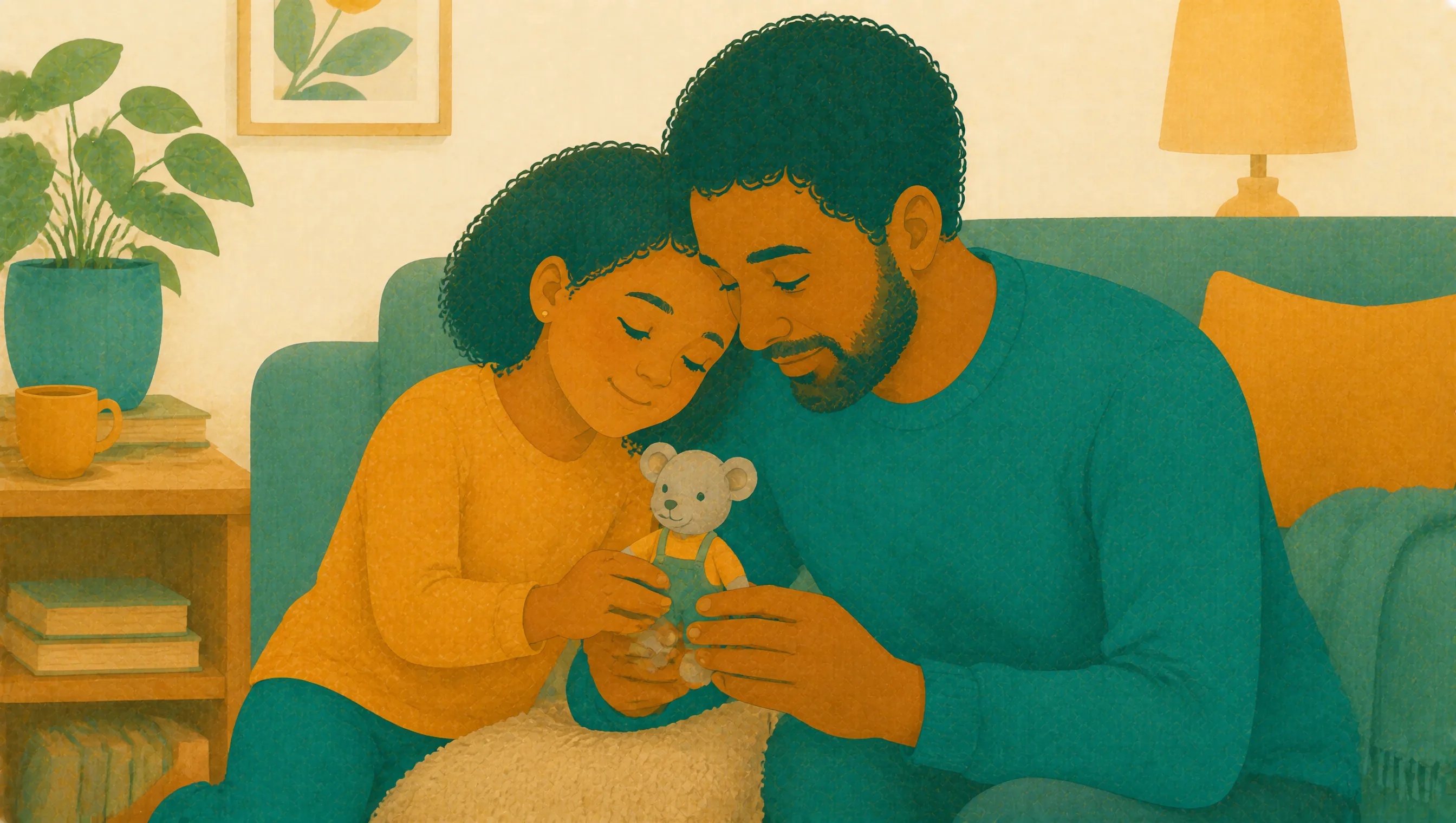
A father and his young daughter sit close together on the sofa, foreheads touching, holding a small toy bear between them.

The short answer

Yes. Autism does not mean that a child lacks affection, empathy or interest in people. A sociable autistic child may actively seek company while finding the timing, interpretation and flexibility of interaction difficult. They might approach people readily but miss signs that somebody wants to stop, copy peers to work out what to do, speak fluently without managing a balanced conversation, or need substantial recovery after social contact. Assessment considers the quality and developmental pattern of communication and interaction alongside repetitive behaviour, interests, flexibility and sensory experience. No single social behaviour rules autism in or out.

  • Wanting people and finding interaction easy are different questions.
  • Eye contact, affection, smiling, humour and empathy can all be present in autistic children.
  • Social communication includes timing, reciprocity, interpretation and adapting to context.
  • A child may connect in ways that other people overlook.
  • Look at effort, misunderstandings and recovery as well as sociability.

An old stereotype says autistic children live in a world of their own. It can make parents doubt what they are seeing when a child is cuddly, funny, talkative or eager to meet people. Professionals can make the same mistake: “She has lovely eye contact, so it cannot be autism.”

That conclusion is not supported by clinical guidance. Autism concerns how social communication and interaction develop, not whether a child has feelings for other people.

Social interest and social navigation are different

A child can want company and still find interaction hard to navigate. Social life asks for rapid work: notice who is listening, judge how much they know, interpret tone, take a turn, revise the plan when somebody disagrees and recognise when the exchange is ending.

A sociable autistic child may:

  • greet unfamiliar people with the closeness they use for family;
  • talk at length without seeing that a listener is lost or wants a turn;
  • ask the same questions as a reliable way to begin contact;
  • join a game enthusiastically but struggle when its rules shift;
  • copy another child closely because imitation supplies the missing instructions;
  • assume that a friendly classmate is a close or safe friend;
  • prefer adults or younger children, whose interaction feels more predictable; or
  • manage the encounter and process confusion only afterwards.

The child's interest is genuine. So is the difficulty. Adults can hold both without treating sociability as evidence against autism.

Affection does not settle the question

Autistic children may seek cuddles, climb onto a parent's lap, miss a grandparent, comfort a sibling or say “I love you” often. Others dislike unexpected touch or show attachment less conventionally. Neither pattern measures the depth of the relationship.

NICE specifically says autism should not be ruled out because a child has good eye contact, smiles, shows affection to family members or takes part in pretend play [1]. These observations form part of an individual profile, not exclusion tests.

Touch can also be selective. A child may crave firm pressure from a trusted person and recoil from a light hand on the shoulder. That is not inconsistent affection. The people, sensory input and predictability are different.

Eye contact is not the same as attention

Some autistic children make frequent eye contact. Some have learned that adults expect it. Some look briefly, look near the face or listen better while looking away.

Requiring a child to hold eye contact can take attention away from the words. Check understanding through their response, not the direction of their eyes. If they answer accurately while drawing or moving, they were attending.

Also ask whether the eye contact is used flexibly. A child might stare for too long, look because a rule says to, or find it difficult to coordinate looking, listening and speaking. Quantity alone says little about the quality or cost of communication.

Empathy may be expressed differently

Claims that autistic people lack empathy collapse several processes into one. A child may notice another person's distress intensely but not know what response is expected. They may need the situation explained, offer a practical solution instead of comforting words, or become overwhelmed by somebody else's emotion.

Non-autistic people can also misread autistic communication. Research with autistic and non-autistic adults has found that information transfer and rapport can work differently depending on whether people share a neurotype [3]. Adult studies cannot tell us how one child feels, but they challenge the assumption that every misunderstanding is a one-sided autistic failure.

Make emotional information explicit. “Grandad is quiet because he is worried about the dog. He would like you to sit with him” gives a child something usable. Do not set tests by withholding the explanation and judging whether they infer it.

Fluent conversation can hide an uneven profile

A child may have advanced vocabulary, tell long stories and talk confidently about familiar subjects. Difficulties can still appear in the back-and-forth structure of conversation.

Notice whether they can:

  • answer a question that does not match the expected script;
  • tell how much background the listener needs;
  • recognise an indirect request;
  • repair a misunderstanding;
  • tolerate another person's version of events;
  • shift away from a favourite topic; and
  • communicate a need when anxious or uncertain.

Do not turn this into another checklist. Compare everyday examples and the support required. Fluent speech is a strength, not proof that all communication is effortless.

Sociable children may be missed

Children who are keen to please or quick to copy peers can appear socially capable in brief observation. They may learn greetings, facial expressions and playground scripts without intuitively understanding every situation. Familiar routines can carry them until friendships become more subtle or the group becomes less forgiving.

The cost may appear as exhaustion, withdrawal, worry about mistakes, rehearsing conversations, or distress after school. These experiences are not unique to autism, and not every sociable autistic child masks. They are reasons to look beyond whether the child said hello and smiled.

Ask school about unstructured moments, group work, misunderstandings and independence. “Has friends” is not enough. Who chooses the activity? Can the child disagree safely? What happens when a peer changes the rules? Are the relationships reciprocal and comfortable?

Look at what makes a relationship work, too. One friendship may thrive because both children enjoy the same detailed interest, use direct language and are content with long pauses. A cousin may be easy company because every visit follows a familiar pattern. These are not lesser relationships. They show the conditions in which connection is accessible and can guide the way adults support newer friendships.

The child's own view matters even when it differs from an adult's. They may describe somebody as a friend after one kind exchange, or say they have no friends despite spending time happily with the same peer each week. Explore what the word means to them. Ask who they seek, who seeks them, how they know an activity is shared and whether they feel able to stop. The purpose is understanding, not correcting their social vocabulary.

Recognise the child's own language of connection

Connection does not have to resemble prolonged face-to-face conversation. A child may:

  • bring a person an object connected with their interest;
  • repeat a joke or phrase that belongs to the relationship;
  • sit nearby doing a separate activity;
  • share facts as a form of trust;
  • invite someone into a familiar game;
  • notice a practical problem and fix it; or
  • seek the same person when overloaded.

Respond to the bid before teaching a more conventional form. If a child shows you the same train for the twentieth time, “You want me to notice the red wheel again” acknowledges the contact. Demanding a question or eye contact first can make connection harder.

Support without turning personality into a lesson

Sociable children may need direct teaching about privacy, consent, safe relationships and how to leave an interaction. Teach rules that protect the child as well as other people. “You may say no to a hug” belongs beside “Ask before hugging somebody.”

Make hidden rules visible. Explain how to tell whether someone is a classmate, friend or trusted adult; what information is private; how to check whether a game is still enjoyable; and who can help when a social situation becomes confusing.

Do not make constant performance the goal. The child needs relationships in which they can move, pause, talk about an interest, use direct language and recover. Friendship and social confidence should mean finding workable connection, not acting non-autistic convincingly.

Do not confuse popularity with safety

A child who knows many people may still have difficulty judging who is trustworthy. Warmth and openness can expose them to pressure, secrecy or relationships in which they always surrender control. Teach the difference between a classmate, friend, close friend and trusted adult using concrete examples from the child's life.

Check whether friendship is mutual. Can the child choose the activity, say no, keep possessions and leave without punishment? Do peers contact them only when they want answers, money or access to something? These questions matter more than whether the child appears included in photographs or has names to list.

Support should strengthen boundaries as well as entry into groups. An autistic child is entitled to choose company, refuse touch and recognise when somebody else has refused. Sociability should never be used as a reason to lower safeguarding attention.

What assessment considers

An autism assessment brings social communication together with development, repetitive behaviour, interests, flexibility, sensory experience and everyday functioning [1]. Clinicians should use history, observation and information from different settings. One warm appointment cannot rule autism out, just as one difficult playground visit cannot confirm it.

Bring examples that show the apparent contradiction:

Maya approaches children readily and calls them friends. She does not notice when they stop answering, follows them after they ask for space and becomes intensely upset when they change the game. With one familiar child and a planned activity, she plays happily for an hour.

That account is more informative than either “highly sociable” or “poor social skills”.

A useful next step

Observe one enjoyable social situation and one difficult one. Record how the child entered, how the other person responded, what changed, which misunderstandings occurred and what the child needed afterwards.

Then offer one piece of access: explain an unwritten rule, shorten the encounter, plan a shared activity or provide a clear exit. The goal is not less sociability. It is safer, more mutual and more comfortable connection for the child who already wants it.

Sources and further reading

  1. [1] NICE. Autism spectrum disorder in under 19s: recognition, referral and diagnosis (accessed 4 August 2026).
  2. [2] NHS. Signs of autism in children (accessed 4 August 2026).
  3. [3] Crompton and colleagues. Autistic peer-to-peer information transfer is highly effective. Adult experimental study; supports a two-way account of communication, not conclusions about an individual child.. 2020 (accessed 4 August 2026).